Warm-Bodied Sharks: How Makos and White Sharks Hold Heat
3 min read
Last Updated on November 15, 2026 by Otis Mako
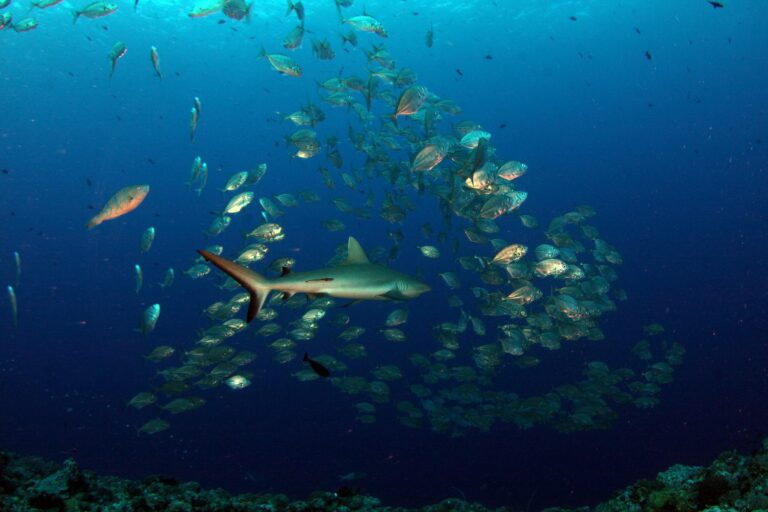
Most fish match the temperature of the water around them. A few sharks do not. Cut into a mako and the swimming muscle along its flanks sits warmer than the sea outside, which is a rare trick for a fish.
The Florida Museum of Natural History notes that the white shark, along with several other lamniform sharks, is endothermic, or warm-blooded, with a body temperature higher than the surrounding water. The details are more specific than “warm-blooded” suggests, and they are still being worked out.
Warm in places, not all over
Biologists call this regional endothermy. A mammal heats its whole body. These sharks heat selected parts and let the rest follow the ocean. A 2023 paper in Biology Letters lists the shared toolkit: centralized red muscle, a thick compact-walled heart ventricle, and counter-current vascular heat exchangers that keep key tissues above the temperature of the water.
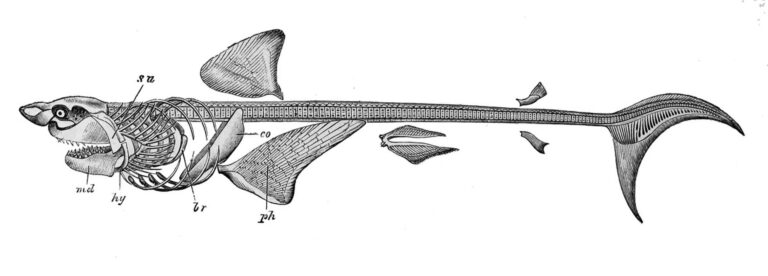
Red muscle is the slow, steady muscle used for cruising. In the warm-bodied sharks it is centralized: the paper says that in the smalltooth sand tiger it extends closer to the backbone than it does in ectotherms such as the blue shark and the pelagic and bigeye threshers. A counter-current heat exchanger lets outgoing warm blood pass its heat to incoming cooler blood, so the warmth stays in the body instead of leaving with the blood.
The same paper says the warm regions can be red muscle, the head, the eyes or the gut, and that the payoffs proposed so far include faster cruising speeds, longer migration distances, better vision, wider habitat range and quicker digestion.
A mako dives into cold water
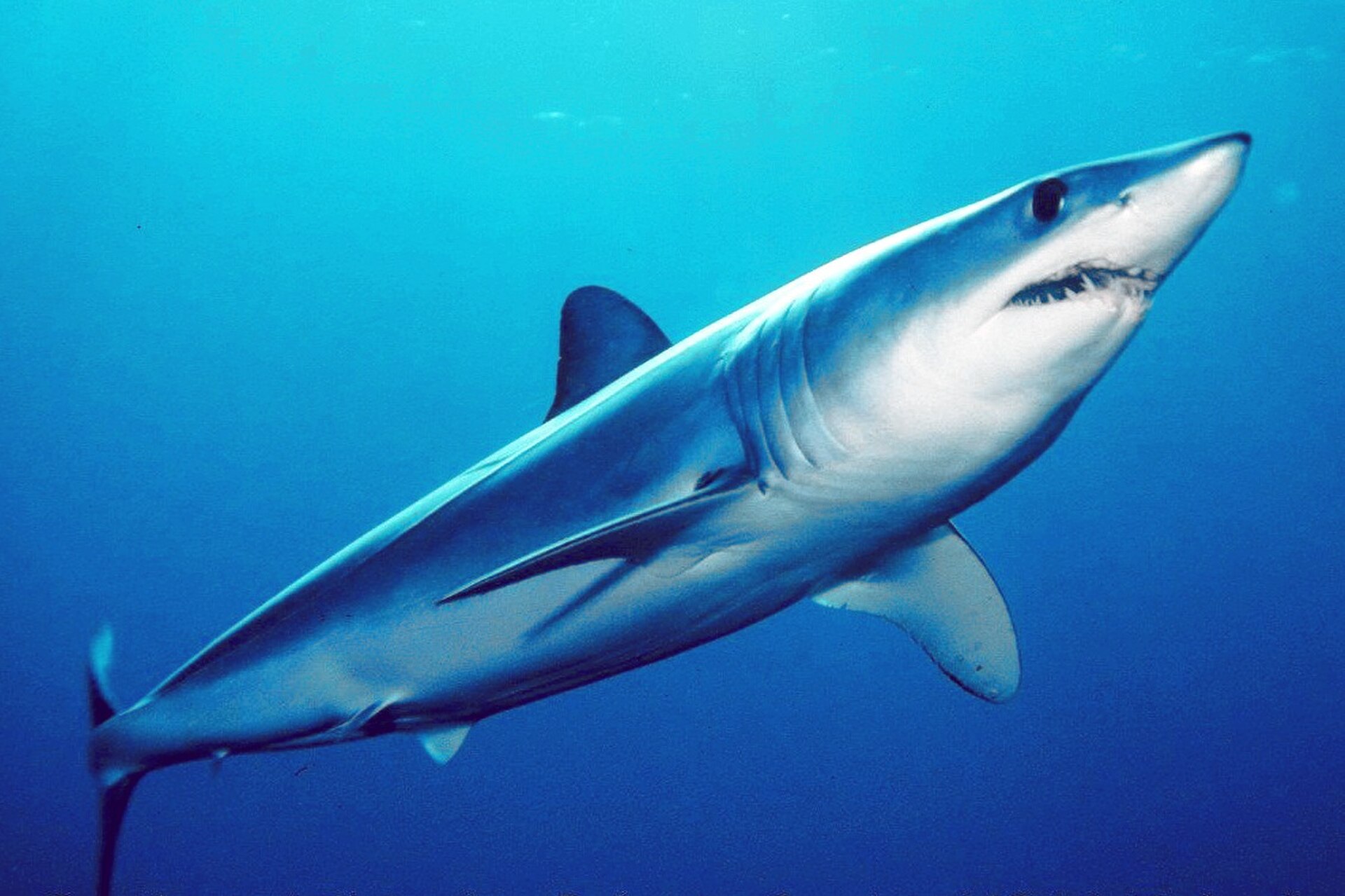
Evidence from living sharks is thin, because few have had a thermometer inside them. A 2025 study in the Journal of Animal Ecology helped. Researchers caught four female shortfin makos off Taitung by longline and fitted animal-borne tags that logged depth, water temperature and muscle temperature for 18 to 30 hours.
- All four crossed the thermocline again and again, meeting temperature swings of up to 7 to 14°C.
- On average their muscle ran 1.5 to 3.9°C warmer than the water.
- The two sharks that dived to roughly 286 to 327 m warmed up 14 to 47 times faster than they cooled down.
- The two shallow divers showed a difference of only one to two times.
That gap matters. A shark that warms quickly but cools slowly can stay in deep, cold water longer and spend less time recovering near the surface. The tagged makos made deep dives of up to 2 to 5 hours. Blue sharks tagged at the same study site, which are not warm-bodied, made repeated one-hour dives.
One mako even warmed its muscle above the sea surface temperature before a deep dive, which the authors suggest may be preparation for the plunge using internal heat. They are careful about it: with four sharks, the study cannot settle questions such as whether larger sharks control heat better.
Which sharks have it
The 2023 paper tallies the order Lamniformes, the group that holds makos, white sharks, porbeagles, salmon sharks and basking sharks. Of 15 living species, the authors count seven as red muscle endotherms if the smalltooth sand tiger result holds, two as red muscle ectotherms and six as unknown. The pelagic and bigeye threshers are on the cool side, as is the blue shark, which sits outside the order. The bigeye thresher appears to have lost the trait, according to the authors.
Two findings stretch the list. The authors report that the smalltooth sand tiger has centralized red muscle and a thick-walled ventricle, features that fit regional endothermy. They could only dissect carcasses, so that result is anatomical, not a measured temperature. And the basking shark, a filter feeder, was shown to be the largest species yet to display these warm-body features, with elevated temperature in the muscle under its skin.
Outside sharks, tunas and billfishes use the same idea. The mako study notes that Atlantic bluefin tuna keep their bodies up to 20°C above the water in cold seas.
Where it came from, and what it costs
The same paper suggests regional endothermy evolved once, early in the lamniform line, and proposes about 113 million years ago from fossil evidence, though it states that the point remains debated. If so, the extinct megalodon likely had it too, and the authors link that to the energy bills of being a gigantic warm-bodied predator. That last link is an argument, not a proven cause of extinction.
For readers of our timeline of shark evolution, this is one of the odd side branches: a fish group that evolved a trick usually credited to birds and mammals.
If you have seen a tagging result or a dissection photo showing red muscle deep in a shark, add what you know in the comments.
Sources
- Centralized red muscle in Odontaspis ferox and the prevalence of regional endothermy in sharks, Biology Letters (Royal Society), 2023
- Enhanced thermoregulation abilities of shortfin mako sharks as the key adaptive significance of regional endothermy in fishes, Journal of Animal Ecology (Wiley), 2025
- White shark species profile, Florida Museum of Natural History
Photo: Mark Conlin, SWFSC Large Pelagics Program, Public domain, via commons.wikimedia.org.
Got a shark photo of your own? Send it to us and we may post it here and on our Facebook page, with your name on it. Share your shark photo