
Shark Reproduction Strategies: Eggs, Live Birth, and Virgin Births
7 min read
Last Updated on November 18, 2026 by Otis Mako
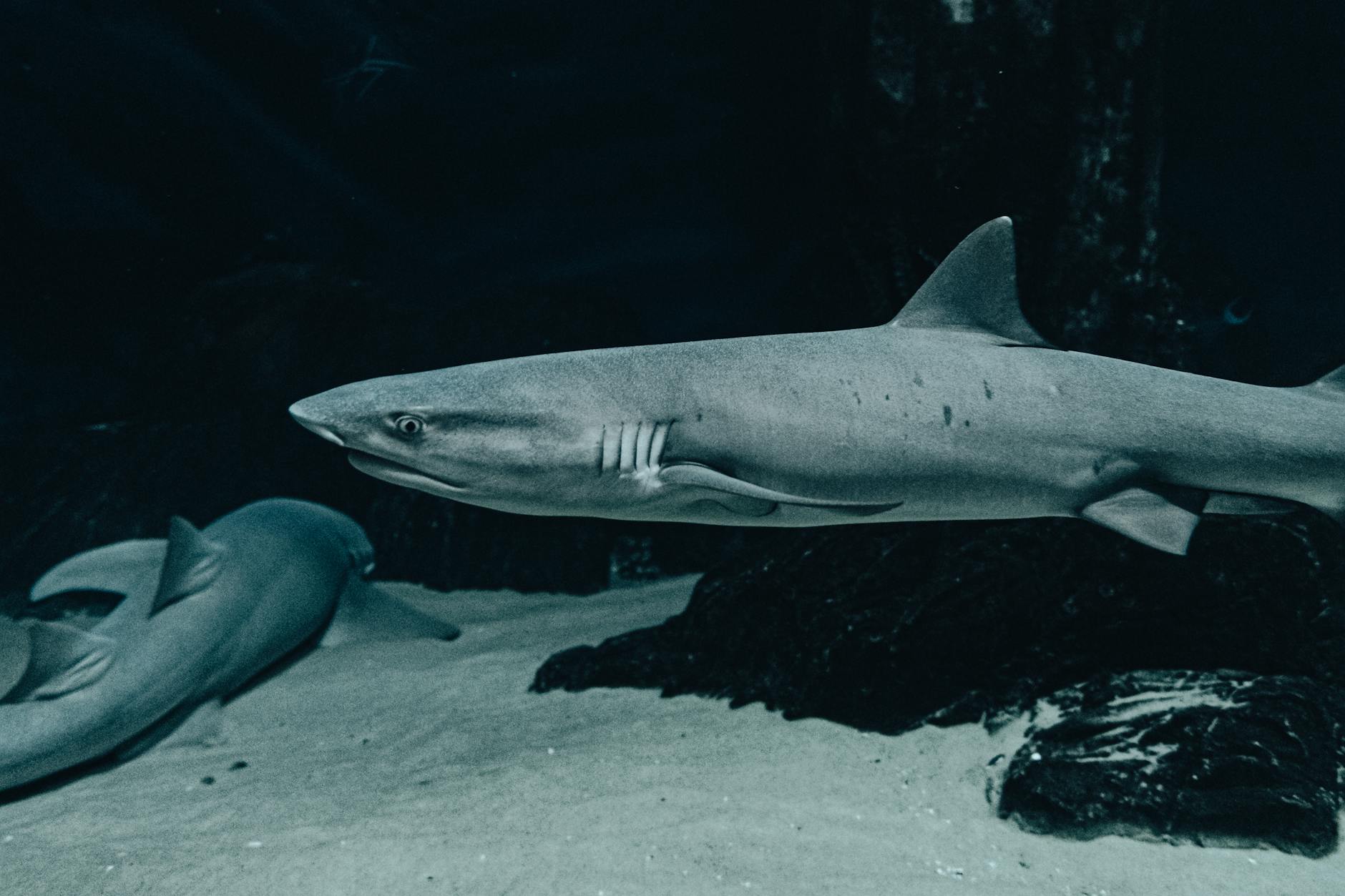
Sharks reproduce in four distinct ways: oviparous (egg-laying), ovoviviparous (eggs hatch inside), viviparous (true live birth via placenta), and parthenogenesis (virgin birth) and each strategy shapes how vulnerable the species is to fishing pressure. Sharks reproduce in four very different ways: laying eggs, hatching eggs inside the body, true live birth via a placenta, and (rarely) virgin birth from an unfertilised egg. The strategy determines how many pups a species can produce per year and how quickly populations can recover from fishing pressure.
Part of our guide: Shark Species.
1. Oviparous: laying eggs
Around 30 percent of shark species lay eggs. The female deposits leathery egg cases, often called mermaid’s purses, attached to seaweed, coral, or rocky outcrops. The embryo develops inside the case for 6 to 15 months, depending on species and water temperature, then hatches as a miniature version of the adult.
Egg layers include most catsharks (Scyliorhinidae), bamboo sharks (Hemiscyllidae), and zebra sharks. The strategy is energy-efficient (no maternal cost beyond producing the case) but exposed: most cases are eaten by predators or scoured off by storms. To compensate, females produce many cases per year, each well camouflaged or armoured for defence.
Notable oviparous species:
- Small-spotted catshark (Scyliorhinus canicula): produces 20 to 100 egg cases per year, attached to seaweed.
- Zebra shark (Stegostoma fasciatum): leathery rounded cases stuck to coral by sticky fibres.
- Brownbanded bamboo shark: ovoviviparous in the wild, but lays eggs in captivity, which is how zoos breed them.
- Port Jackson shark: spiral-shaped cases wedged into crevices.
- Horn shark: cases like screw threads, designed to wedge into rocks.
2. Ovoviviparous: eggs hatch inside the mother
Most sharks (around 60 percent of species) are ovoviviparous. The female produces eggs but retains them inside her body, where the embryos hatch and continue developing until birth. There is no placenta and no maternal nutrient transfer beyond the yolk in the original egg; the female simply provides shelter and stable conditions until the pups are ready to be born live.
Some ovoviviparous species feed their unborn pups via unfertilised egg capsules produced during pregnancy (oophagy), which is essentially in-utero snack delivery. Sand tiger sharks take this further with intrauterine cannibalism: one embryo eats its siblings inside each uterus and emerges as the only survivor.
Notable ovoviviparous species:
- Great white shark: oophagy, 2 to 10 pups per litter.
- Mako shark: oophagy, 4 to 25 pups.
- Tiger shark: ovoviviparous without oophagy, 10 to 80 pups.
- Sand tiger shark: intrauterine cannibalism, 2 pups total per litter.
- Whale shark: ovoviviparous, with the only confirmed pregnancy holding 300 embryos at various stages.
- Frilled shark: estimated 42 month gestation, 2 to 12 pups.
3. Viviparous: true live birth with placenta
Around 10 percent of sharks (mostly Carcharhiniformes) have a true placenta. The female produces eggs that implant in the uterine wall via a yolk sac connection, and over the gestation the connection develops into a placenta similar in function to a mammal’s. Nutrients pass from the female to the embryos through the placenta, in addition to whatever yolk was originally provided.
Placental viviparity allows higher pup survival rates and larger pup sizes at birth, but reduces the number of pups per litter. Hammerheads, bull sharks, blue sharks, and many requiem sharks (Carcharhinidae) use this strategy. The shared family resemblance with mammalian pregnancy is one of evolution’s classic examples of convergent design.
4. Parthenogenesis: virgin birth
Parthenogenesis is the rarest strategy. A female produces a pup from an unfertilised egg, with no sperm involved. The resulting pup is genetically nearly identical to the mother (a half clone, technically). The phenomenon has been confirmed in at least seven shark species, almost always in captivity where mature females are isolated from males.
The first documented case was a bonnethead shark at the Henry Doorly Zoo in Nebraska in 2007. Since then it has been documented in zebra sharks (Burgers Zoo, 2016), smoothhound sharks, white-spotted bamboo sharks, and others. Whether parthenogenesis happens regularly in wild sharks is unknown but at least some genetic surveys suggest occasional wild cases. The mechanism is automixis, in which the egg fuses with a polar body during meiosis to restore a diploid chromosome set.
Why this matters for conservation
Reproductive strategy determines how quickly a population can recover from over-fishing. Sharks that produce many small eggs (oviparous) and lots of fast-growing pups recover faster than sharks that produce few large pups via a long pregnancy. The sand tiger’s 2 pups per litter every 2 years is among the lowest reproductive output in the fish world. Mako sharks at 4 to 25 pups every 2 to 3 years are also slow recoverers.
Compare this to bony fish, where a single female cod produces millions of eggs per year. Sharks have invested in low-volume, high-quality offspring strategies that work well in stable ecosystems but fail badly under fishing pressure. The threatened listings of great whites (Vulnerable) and of great and scalloped hammerheads, oceanic whitetips, and sand tigers (Critically Endangered) all trace back partly to this slow reproductive math.
Mating: still mostly a mystery
Most shark mating has never been observed in the wild. We know males have paired claspers (modified pelvic fins) that transfer sperm into the female. We know mating is rough, often leaving bite marks on the female’s flanks and gill area. We know some species form mating aggregations at specific times of year. Beyond that, individual species behaviour is patchy.
Lemon sharks, nurse sharks, and Caribbean reef sharks have been most studied because they aggregate in shallow water at the right season. Great white shark mating has never been filmed in the wild. Whale shark mating has been seen exactly twice in 200 years of human observation. Most of the field is still in the looking-for-clues phase.
Pup survival in the wild
Even with maternal investment, pup survival is low. Many shark species use shallow coastal nurseries (estuaries, mangroves, bays) where pups can hide from larger predators including other sharks. Even so, first-year mortality is often 60 to 80 percent. Bull shark pups in Caribbean nurseries survive at around 35 percent in their first year.
Loss of nursery habitat is one of the biggest non-fisheries threats to shark populations. Coastal development, mangrove clearance, and water quality changes in nursery estuaries can wipe out a year’s recruitment for an entire region. Conservation strategies that focus only on adult protection miss this critical early life stage.
Putting it all together
Shark reproduction is a study in evolutionary trade-offs. Lay many eggs and lose most to predators, or carry a few pups for a long time and give them a head start. Both work, but neither produces the explosive recovery that bony fish can pull off. The result is a group of animals exquisitely tuned for stable ecosystems and brutally exposed to modern fishing pressure.
Understanding which strategy a species uses is the foundation of any conservation plan. The IUCN Red List explicitly weights reproductive rate when assessing extinction risk, which is why sand tigers and mantas, both with slow strategies, jumped multiple categories in the last 20 years. The biology is the story.
Related reading
For shark fans browsing for something to take home, see our store collections of shark books.
See the IUCN Red List. See the Shark Trust.
Frequently asked questions
What are the different ways sharks reproduce?
Sharks reproduce in four ways. Oviparous (egg-laying), used by around 30 percent of species. Ovoviviparous (eggs hatch inside the female), used by around 60 percent. Viviparous (true live birth via placenta), used by around 10 percent. And parthenogenesis (virgin birth from an unfertilised egg), a rare strategy confirmed in at least seven species, mostly in captivity.
Do sharks lay eggs or have live babies?
Both, depending on the species. Around 30 percent of sharks lay leathery egg cases (mermaid’s purses). The other 70 percent give birth to live pups, either via ovoviviparity (eggs hatch inside the mother) or via true placental viviparity (similar to mammals). Some species, like whale sharks, do something in between, storing eggs and giving birth to live pups in staggered broods.
What is a mermaid’s purse?
A mermaid’s purse is the leathery egg case of an oviparous shark or skate. The cases are usually rectangular or spiral shaped, with tendrils that attach to seaweed or coral. Embryos develop inside for 6 to 15 months before hatching. Empty cases often wash up on beaches and are a popular natural-history find.
Can sharks have virgin births?
Yes. Parthenogenesis, where a female produces a pup from an unfertilised egg, has been confirmed in at least seven shark species, almost all in captivity. The first documented case was a bonnethead shark at the Henry Doorly Zoo in 2007. The mechanism is automixis, in which the egg fuses with a polar body during meiosis. Pups are nearly genetically identical to the mother.
What is intrauterine cannibalism?
A reproductive strategy used by sand tiger sharks and some related species. The female carries multiple embryos in each of her two uteri. Once one embryo develops teeth, it eats its siblings inside the womb. Each uterus produces a single dominant pup that emerges around 1 m long at birth. The pups have an exceptional survival advantage but the strategy yields only 2 pups per litter.
Which shark has the longest pregnancy?
The frilled shark has the longest estimated gestation of any shark, around 42 months (3.5 years). This is among the longest pregnancies of any vertebrate. Long gestation reflects the cold deep-sea environment where embryos develop slowly. Most coastal sharks have gestations of 9 to 16 months.
How many pups do sharks have in a litter?
It varies massively by species. Sand tigers produce 2 pups per litter every 2 years (one per uterus). Whale sharks have produced 300 embryos at staggered stages in a single recorded pregnancy. Tiger sharks have litters of 10 to 80. Most coastal Carcharhiniformes produce 6 to 15 pups per litter.
Why does shark reproduction matter for conservation?
Reproductive rate determines how quickly a population can recover from over-fishing. Sharks with low pup output (sand tigers, makos, hammerheads) take decades to rebuild after a population crash. Sharks with higher output (smaller catsharks, oviparous species) recover faster. The IUCN Red List explicitly weights reproductive rate when assessing extinction risk.
By Otis Mako. Last updated 18 November 2026.
Updated 18 November 2026: corrected the great white to Vulnerable; it is not Critically Endangered. Source: IUCN Red List version 2025-2, as quoted by FishBase.
Got a shark photo of your own? Send it to us and we may post it here and on our Facebook page, with your name on it. Share your shark photo

Is there a way to tell a catshark egg case from a skate one? The kids found an empty mermaid’s purse on the beach and want to know what laid it.
Why would one shark family go for eggs and a close cousin for live birth? Is it mostly down to how cold or deep the water is?