How Sharks Stay Afloat Without a Swim Bladder
4 min read
Last Updated on November 5, 2026 by Otis Mako
A bony fish has a built-in float. A gas-filled swim bladder lets it hang in the water without effort. Sharks never got one, and yet a whale shark cruises at depth, a Greenland shark drifts through Arctic water, and a mako holds its station while hunting. They all solve the same problem in different ways.
The short version, from a recent buoyancy study in the Journal of Experimental Biology: sharks “regulate buoyancy hydrostatically through low-density lipid stores in their livers, or they compensate for it hydrodynamically through lift generated while swimming.” Oil does the floating for some. Fins and tail do it for others. Most species use a mix.
The oil-filled liver
Shark livers are large and full of oil. Oil is lighter than seawater, so a big oily liver acts like a float built into the body. It is not a gas, so it does not shrink or expand as the shark changes depth, which is a real advantage for an animal that moves up and down the water column.
Research on liver oils from 10 species of deep-sea sharks and their relatives found that the density gap between the oil and seawater stays almost constant with pressure all the way to full ocean depth. Temperature matters more. Moving between warm and cold water masses can cut the lift from the oil by up to 10% between the surface and 3,500 metres. For a slow swimmer that is enough to matter, and at higher speeds it hardly shows.
Lift from the fins
Oil has a cost. A bigger liver means a bigger, heavier-feeling body to carry around, and fast open-ocean hunters have little room for one. Fast-swimming pelagic sharks are, in the words of the same Journal of Experimental Biology paper, “predominantly negatively buoyant.” They sink when they stop, and they use lift from the pectoral fins, tail and body to hold their depth while swimming.
A comparison of body composition across 32 shark species found a continuum. At one end are buoyant sharks with large livers in deeper ecosystems. At the other end are denser sharks with small livers in surface waters. The modelling in that study suggests neutral buoyancy gives lower drag and more efficient steady swimming, while negative buoyancy may be more efficient for accelerating. That fits a fast predator such as the mako, which does not need to idle and does need to burst.
A lighter skeleton
Cartilage is part of the story too. A CT study in Communications Biology scanned sharks from all nine orders and 26 of the 35 families. Skeletal mineralisation varied a lot. Mineralised tissue made up several percent of body volume in the epaulet shark and the sand tiger, and only parts per thousand in the Greenland shark. Deeper-dwelling species generally had less mineralised skeletons, which the authors link to buoyancy regulation and saving energy.
The authors frame this as a pattern across species rather than a proven single cause. What the scans show is that lighter skeletons and deeper homes go together.
Sharks that float upwards
Deep-sea sharks push the oil strategy furthest. Researchers fitted accelerometers to bluntnose sixgill sharks and prickly sharks, and published the results in PLoS ONE. The sharks swam at 200 to 300 metres at night and deeper than 500 metres by day. They worked harder swimming down than swimming up, and they could glide uphill for several minutes. The authors concluded these sharks are positively buoyant in the wild, which they called unexpected for animals that do not breathe air. Our sixgill profile covers the species itself.
The authors suggest the upward drift may help with stealthy hunting, gliding up to prey from below, or help the evening climb when muscles are coolest.
The Greenland shark test
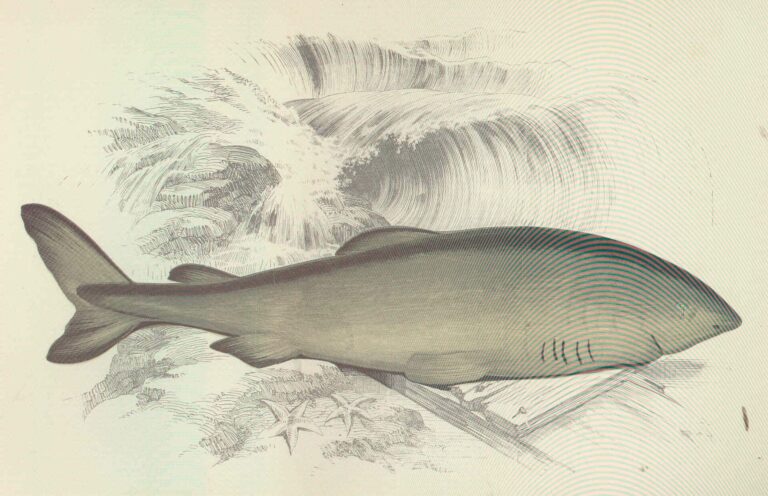
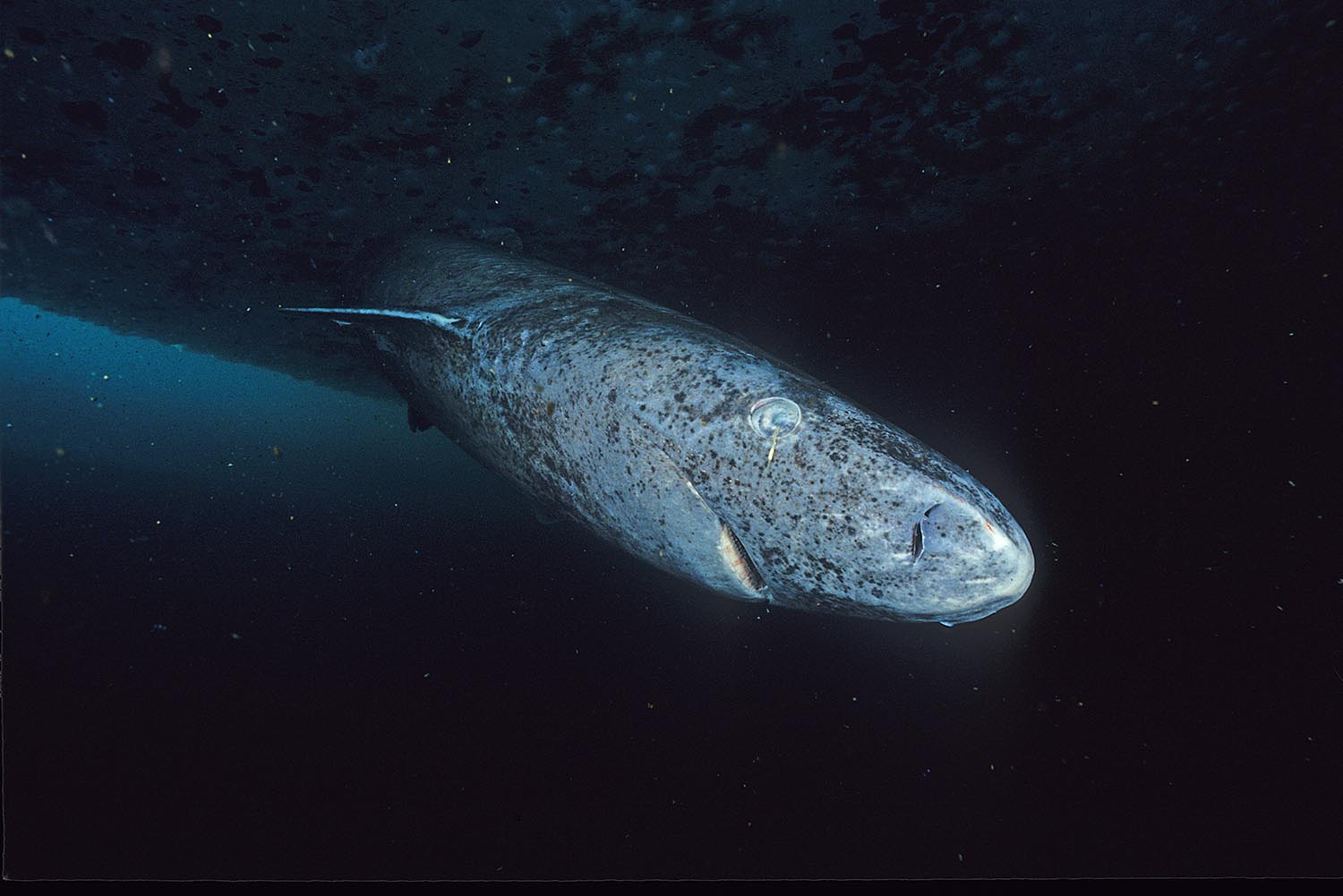
The newest check is on a species that should sit near neutral. A team tagged 29 Greenland sharks with biologgers and compared swimming effort on the way up and the way down. They found individuals on both sides. Effort against buoyancy reached 225% of effort with it in the negatively buoyant sharks, and 177% in the positively buoyant ones. Across the group there was no overall lean either way, in line with the idea that slow deep-water species are pushed towards neutral buoyancy.
The authors caution that small departures from neutral could cost a slow animal a lot, and that the exact size of the variation still needs direct measurement. Our Greenland shark profile has the background on the animal.
What to take from it
There is no single shark answer. A mako pays for its speed by sinking when it stops. A sixgill rides its oil upward. A Greenland shark sits near the middle and spends little. Each one is a different trade between drag, lift and the weight of a liver.
Did you spot a shark behaving oddly in the water column on a dive? Share what you saw in the comments.
Sources
- Ste-Marie et al., Journal of Experimental Biology: Greenland sharks conform to expectations of neutral buoyancy
- Priede et al., Journal of Experimental Biology: Near-equal compressibility of liver oil and seawater
- Nakamura, Meyer and Sato, PLoS ONE: Unexpected positive buoyancy in deep sea sharks
- Gleiss, Potvin and Goldbogen, Proceedings of the Royal Society B: Physical trade-offs shape the evolution of buoyancy control in sharks
- Winkel et al., Communications Biology: Quantitative imaging supports that endoskeletal mineralization in sharks is an adaptive trait
Photo: Hemming1952, CC BY-SA 4.0, via commons.wikimedia.org.
Got a shark photo of your own? Send it to us and we may post it here and on our Facebook page, with your name on it. Share your shark photo