Do Sharks Sleep? What the Studies Found
4 min read
Last Updated on October 26, 2026 by Otis Mako
Ask a room of shark fans whether sharks sleep and you will get two confident answers. Half will say they never stop swimming, so they never sleep. The other half will say they rest on the seabed like any other fish. Both groups are describing real sharks. The trouble is that “shark” covers hundreds of species that breathe in very different ways, and the answer depends on which one you mean.
I am an enthusiast, not a sleep scientist, so everything below comes from the published studies and I link each one. Where researchers have not worked something out yet, I say so.
Why the breathing method matters
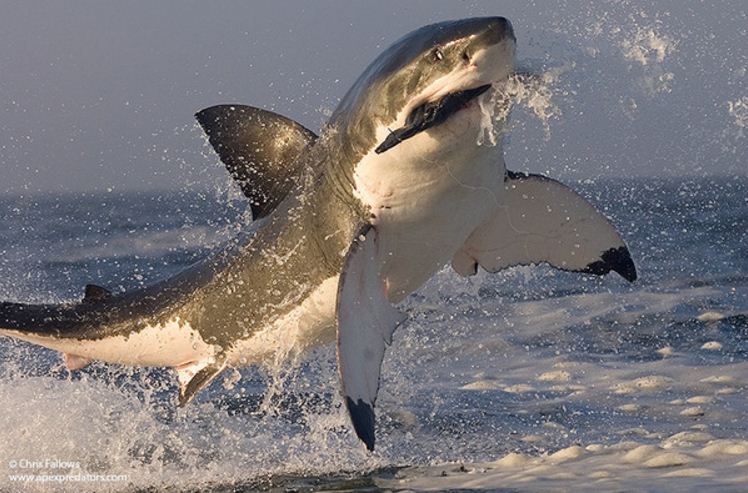
A shark has to move oxygen-rich water across its gills. There are two main ways to do it. The Save Our Seas Foundation describes it this way: some sharks swim perpetually, “ramming” seawater over their gills, and are called ram ventilators. It lists white sharks, hammerheads and makos as examples. You can read more about the first and last of those in our great white shark deep dive and our mako shark deep dive.
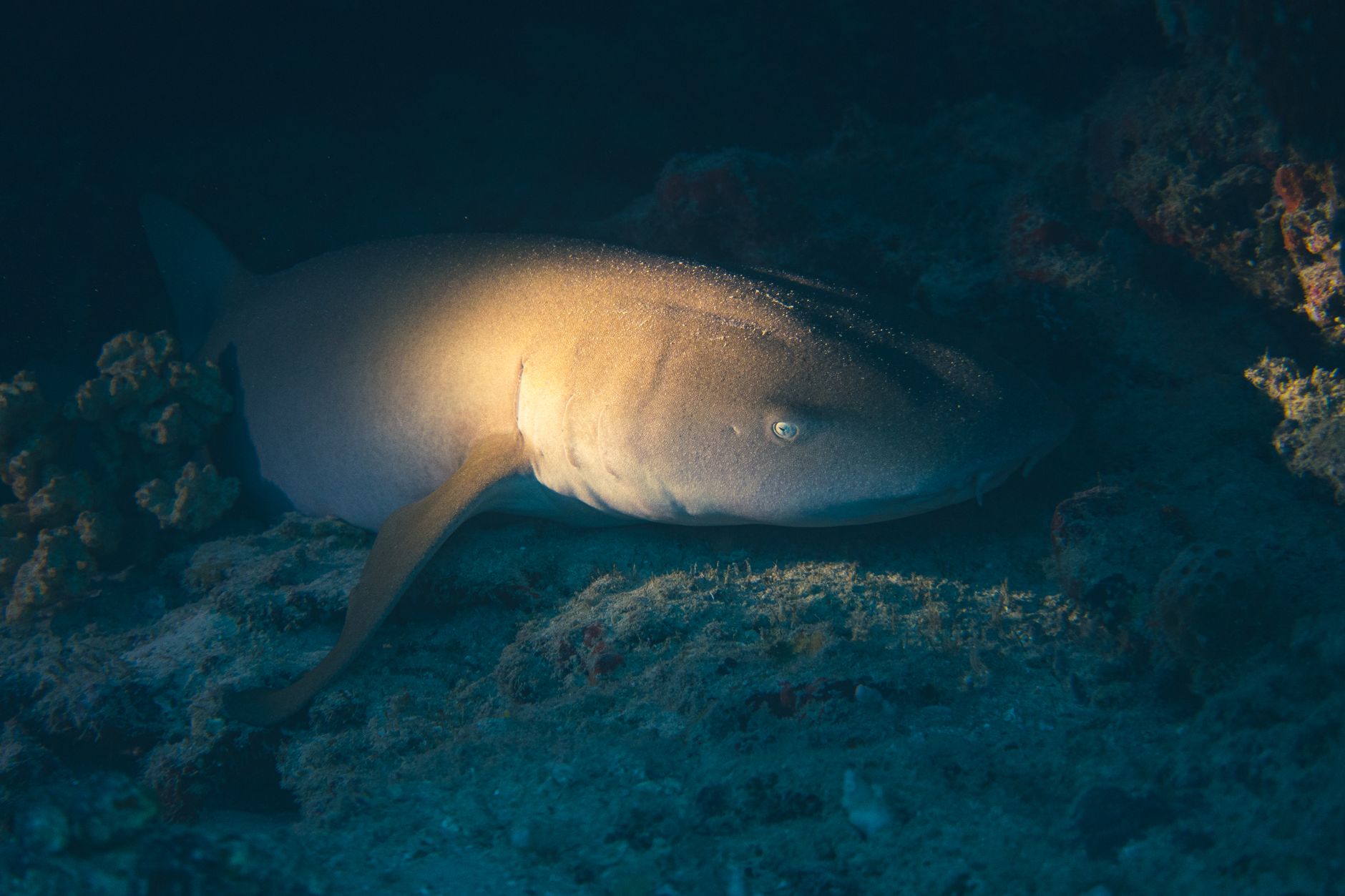
Other sharks pump water over their gills with their mouths while staying still. These are the buccal pumpers, and the same source names wobbegongs and Port Jackson sharks. Some species, including the ragged tooth and tiger shark, switch between both methods. Our guide to the wobbegong family covers the carpet sharks that lie on the bottom.
Many sharks also have a spiracle. According to the Wikipedia entry on spiracles, this is a small hole behind each eye, and in many sharks it helps take water into the mouth before it leaves through the gills. The same entry says that requiem sharks and hammerheads, which became obligate ram ventilators, have lost their spiracles.
This split is why the sleep question is really two questions. A shark that can sit still has an obvious chance to rest. A shark that must keep moving to breathe does not.
The sharks that lie still
For a long time nobody had shown that any shark sleeps. A research team tackled the problem with two bottom-living species, the Port Jackson shark and the draughtsboard shark. Both are buccal pumpers that stay motionless for long stretches. You can meet the first in our Port Jackson shark profile.
Sitting still is not proof of sleep, because an animal can be quietly awake. Researchers separate the two with an arousal threshold: a sleeping animal is harder to rouse. In a 2021 paper in the Journal of Sleep Research, the team reported that inactive sharks of both species needed significantly stronger electrical stimulation before they showed a visible response. The authors called it the first such demonstration for this group of vertebrates.
The same paper found something that did not fit the pattern. Sharks kept from resting did not make up for it by resting more during their normal active period. Many animals make up for lost rest, but these sharks showed no significant compensatory increase.
What a sleeping shark looks like
A follow-up study in Biology Letters measured how much oxygen draughtsboard sharks used over 24 hours while they were resting, actively swimming, or in periods thought to be sleep. The results point to two signs.
- A lower metabolic rate.
- A flat body posture, with the body held flat.
Eye closure turned out to be a poor indicator. A draughtsboard shark can be asleep with its eyes open, so watching a shark’s eyelids tells you very little. The authors also argue the results support the idea that sleep helps animals conserve energy, here in some of the oldest living jawed vertebrates.
A 2024 paper in the Journal of Experimental Zoology tried to read brain activity with EEG electrodes. It did not work well. The authors report that the amount of stable EEG signal was too low to replicate. Muscle tone gave a cleaner result: it was strongest in active sharks, lower in quietly awake sharks and lowest in sleeping ones.
The open question: sharks that never stop
If a shark must swim to breathe, when does it rest? A 2020 study in the Journal of Biological Rhythms compared five species, three ram ventilators and two buccal pumpers. The school shark and the spotted estuary smooth-hound swam continuously. The smooth-hound swam slower and covered less distance at night, and the spiny dogfish showed a similar pattern while swimming less overall.
So some ram ventilators do change their behaviour with the light cycle. That is a hint of a rest period, not a demonstration of sleep. The Save Our Seas Foundation puts it plainly: conclusive evidence for sleep in actively swimming sharks remains absent. It also notes that only 33 sharks and 1 ray are formally recorded showing possible sleep behaviour, so the whole picture rests on a small number of species.
You may have read that swimming sharks sleep with half the brain at a time, or on spinal autopilot. Those ideas are circulating, but I found no study in my reading that tests them in a ram-ventilating shark, so I am leaving them out until one exists.
What we can say
- Two bottom-living buccal pumpers, the Port Jackson and draughtsboard sharks, show the behaviour and physiology of sleep.
- Sleep in these species means lying still, lower oxygen use, a flat posture and a higher arousal threshold. Open eyes do not rule it out.
- For sharks that swim nonstop to breathe, nobody has shown sleep yet. Their rest, if it exists, probably looks very different.
- Only a small number of species have been studied, so the honest answer for most of the 500-plus species is that we do not know.
If you want the related senses side of the story, our post on how sharks use their senses to hunt is a good next read. Have you watched a shark lying still on a dive or in an aquarium? Tell us what you saw in the comments.
Sources
- Kelly et al. 2021, Behavioural sleep in two species of buccal pumping sharks, Journal of Sleep Research (Wiley)
- Kelly et al. 2022, Energy conservation characterizes sleep in sharks, Biology Letters (Royal Society)
- Lesku et al. 2024, An electrophysiological correlate of sleep in a shark, Journal of Experimental Zoology (Wiley)
- Kelly et al. 2020, Diverse Activity Rhythms in Sharks, Journal of Biological Rhythms (SAGE)
- Save Our Seas Foundation, Do sharks sleep?
- Wikipedia, Spiracle (vertebrates)
Photo: Charlotte Youlten, Pexels Licence, via www.pexels.com.
Got a shark photo of your own? Send it to us and we may post it here and on our Facebook page, with your name on it. Share your shark photo