
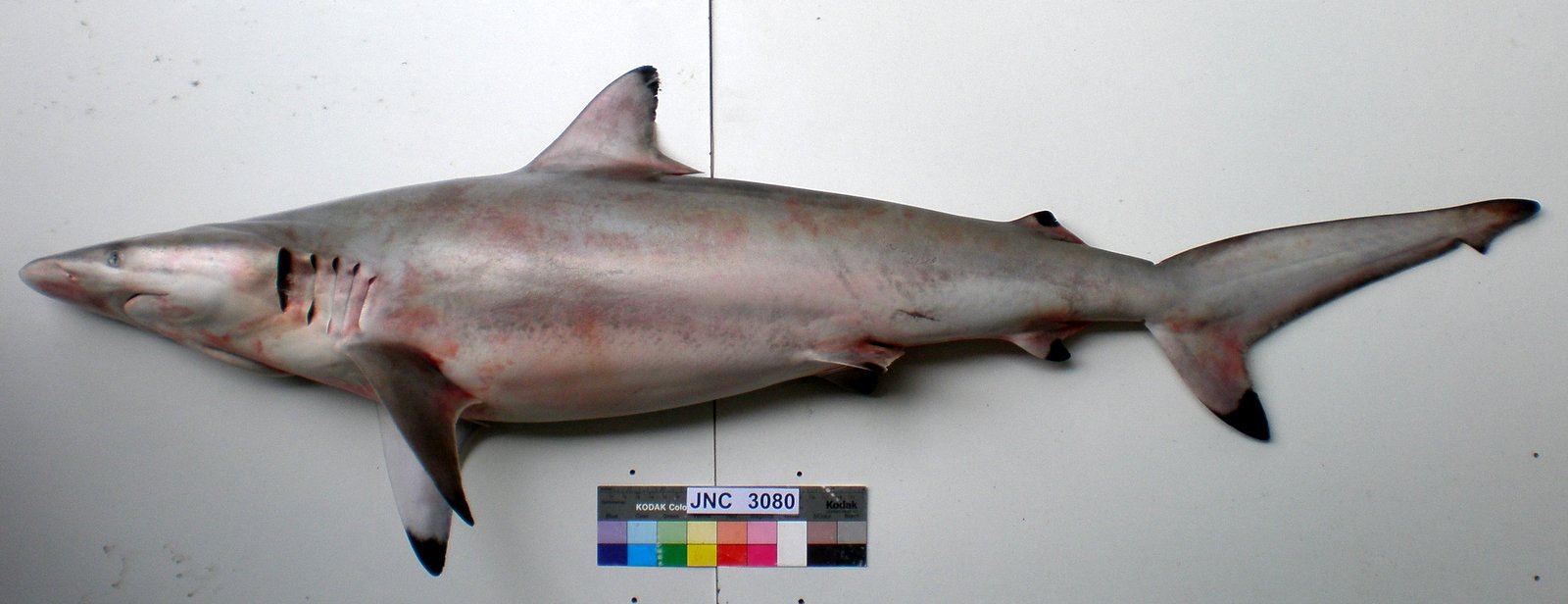
Spinner Shark: The Shark That Leaps and Rotates Out of the Water
6 min read
Last Updated on November 24, 2026 by Otis Mako
The spinner shark (Carcharhinus brevipinna) is a 3 m coastal shark that hunts schooling fish by rocketing through bait balls and spinning out of the water above the surface. The spinner shark (Carcharhinus brevipinna) is a long, slim coastal predator famous for spiralling vertically out of the water after a feeding rush. Reaches around 3 m, lives in warm coastal waters worldwide, and is responsible for around 16 unprovoked attacks in the ISAF (none fatal).
Part of our guide: Shark Species.
Key facts at a glance
| Scientific name | Carcharhinus brevipinna |
|---|---|
| Family | Carcharhinidae |
| Max length | Around 3 m (9.8 ft) |
| Max weight | Around 90 kg (200 lb) |
| Diet | Schooling fish like sardines, herring, mullet, mackerel, anchovies, squid |
| Habitat | Coastal waters of every tropical and warm-temperate ocean |
| Lifespan | Around 20 years |
| IUCN status | Vulnerable |
| Recorded unprovoked attacks on humans | 16, with 0 fatalities (ISAF) |
Why they spin
The spinning leap is feeding behaviour, not display. Spinner sharks attack schools of small bait fish from below, accelerating vertically with their mouth open and biting through everything in their path. The momentum and the spiral movement (a counter-rotation from snapping at fish on alternate sides) carries the shark right out of the water. The animal can complete two or three full rotations in mid-air before landing.
Other sharks rush bait balls but only the spinner and its close relative the blacktip shark (Carcharhinus limbatus) regularly clear the surface. The pattern is so consistent that boat captains in Florida, Mozambique, and South Africa use breaching spinners as a marker of where bait is schooling.
Identification: spinner vs blacktip
Spinners and blacktips look nearly identical and were considered the same species until 1939. Both are around 2 to 3 m, both have black tipped fins, both hunt similar prey, and both spin out of bait balls. The differences are subtle.
Spotting the difference:
- Spinners have a more slender body and longer pointed snout.
- Spinners have black tips on the anal fin; blacktips do not.
- Adult spinners have a slightly more pronounced second dorsal fin further back.
- Spinners reach 3 m; blacktips top out around 2.5 m.
- Blacktips tend to ambush in shallower water; spinners often work deeper bait schools.
Where to find them
Spinner sharks live in coastal waters of every tropical and warm temperate ocean. The western Atlantic population ranges from North Carolina to Brazil, with seasonal migrations driven by water temperature. They appear in mass aggregations off Palm Beach, Florida, every winter, occasionally numbering in the thousands as they follow migrating bait fish south.
Indian Ocean and South Pacific populations follow similar patterns. Off South Africa, spinners are part of the sardine run cast, alongside dolphins, gannets, and copper sharks. In Australia they range from the Kimberley down to northern New South Wales. They prefer water of 18 to 27 C and rarely venture into colder seas.
Diet
Spinner sharks specialise in fast schooling fish: sardines, herring, mullet, mackerel, menhaden, anchovies, and small jacks. Squid and octopus are part of the diet, as are small rays and the occasional crustacean. They rarely take anything larger than 40 cm.
The hunting style is built for high-density, low-effort feeding. A spinner shark accelerating through a bait ball can take three or four fish per pass. They are not ambush predators in the way bull sharks are; their game is bulk attack on dense prey.
Are they dangerous?
The International Shark Attack File records 16 unprovoked attacks attributed to spinner sharks, with no fatalities. Almost all incidents have involved swimmers or surfers in murky water where a spinner was hunting bait fish and misidentified a flash of skin or a foot as prey. Bites are quick and rarely repeated: the shark leaves once it realises the target is not a fish.
Some of the Florida shark-bite spikes in summer are attributed to spinners working bait balls close to swim beaches. The bites are usually shallow and heal cleanly, although they still account for a real fraction of east coast US incidents.
Reproduction and life cycle
Spinners are viviparous, with embryos nourished through a placenta-like yolk sac connection. Females give birth to 3 to 15 pups (typically 6 to 10) after a 12 to 15 month gestation. Pups are around 60 cm at birth and head straight to inshore nursery areas, usually shallow estuaries and bays.
Females mature at around 6 to 7 years and 1.7 m. Lifespan is around 20 years. The combination of late maturity, modest litter size, and high commercial value makes the species more vulnerable than its current Vulnerable IUCN listing might suggest.
Conservation
Spinners are caught in coastal longline, gillnet, and recreational fisheries across their range. Their fins enter the East Asian fin trade, and their meat is sold in many countries as a generic shark or as labelled spinner. Catch limits exist in the US South East and South Africa, but enforcement varies, and unreported catch is a real issue.
The IUCN reassessed spinner sharks as Vulnerable in 2020, citing population declines of 50 to 70 percent in parts of the Atlantic and the western Indian Ocean over three generations. Targeted research is sparse, and most population data comes from coastal fishery surveys rather than dedicated stock assessments.
Watching spinners in the wild
Palm Beach, Florida, runs a seasonal spinner shark migration in January and February each year, when thousands of spinners and blacktips push south along the beach. Drone footage of the spinner schools is a regular feature of regional news. The sharks rarely come closer than 50 m to the beach, but lifeguards will close the water if a school turns inshore.
Mozambique and South Africa’s sardine run (May to July) produces some of the most dramatic spinner breaches on Earth. Charter boats and diving operators have built whole seasons around the spectacle. The breaches are most reliable in the first hour after sunrise, when bait balls are densest at the surface.
Related reading
For shark fans browsing for something to take home, see our store collections of shark toys.
See the IUCN Red List entry. See the International Shark Attack File.
Frequently asked questions
Why do spinner sharks spin?
The spinning leap is a feeding strategy. Spinners attack schools of bait fish from below, accelerating vertically with their mouths open and snapping at fish on alternate sides. The counter-rotation builds spin, and the momentum carries the shark out of the water. They can complete two or three rotations in mid-air before landing back in the water.
What is the difference between a spinner and a blacktip shark?
Spinners and blacktips look almost identical and were classified as the same species until 1939. Spinners are slightly slimmer, have black tips on the anal fin (blacktips do not), have a more pointed snout, and reach 3 m versus the blacktip’s 2.5 m maximum. Both species hunt bait balls in similar ways and can spin out of the water, although the spinner does it more reliably.
Are spinner sharks dangerous to humans?
Rarely. The International Shark Attack File records 16 unprovoked attacks attributed to spinners with no fatalities. Most incidents are quick bites in murky water near bait balls, where the shark mistakes a flash of skin for a fish and breaks off once it realises. Bites tend to be shallow and heal cleanly.
Where can I watch spinner sharks breaching?
Palm Beach, Florida, hosts a winter migration of thousands of spinners and blacktips in January and February. The sardine run off South Africa and Mozambique (May to July) is the other spectacular site, with dense bait balls and many breaches per hour in the first hour after sunrise.
What do spinner sharks eat?
Spinners specialise in small schooling fish: sardines, herring, mullet, mackerel, anchovies, menhaden, and small jacks. They also take squid, octopus, and small rays. They rarely target prey larger than 40 cm.
How big do spinner sharks get?
Adult spinners reach a maximum of around 3 m (9.8 ft) and 90 kg. Most adults are 2 to 2.6 m. Females tend to be larger than males and mature later.
Are spinner sharks endangered?
The IUCN lists spinner sharks as Vulnerable. Atlantic and Indian Ocean populations have declined by 50 to 70 percent over three generations, mostly due to coastal commercial fisheries and the fin trade. Catch limits exist in the United States and South Africa but enforcement is uneven.
How long do spinner sharks live?
Around 20 years. Females mature at 6 to 7 years and 1.7 m, after which they give birth to 3 to 15 pups every two years following a 12 to 15 month gestation.
By Otis Mako. Last updated 13 May 2026.
Got a shark photo of your own? Send it to us and we may post it here and on our Facebook page, with your name on it. Share your shark photo



Checking the anal fin for a black tip is going in my notes. I’d been going by how slim they look, which is useless from a boat.
I watched some sardine run footage a while back and kept seeing sharks flip right out of the water without knowing what they were. Probably spinners, now that I think about it. Do the gannets follow the sharks or the other way round?
Probably spinners, yes, though blacktips do it too. On the gannets, I think everyone is just chasing the same bait ball and whoever finds it first tips off the rest.