
Bull Shark Profile: Facts, Diet, Habitat & Complete Guide
10 min read
Last Updated on May 25, 2026 by Otis Mako

Part of our guide: The Complete Shark Species Reference.
The bull shark (Carcharhinus leucas) is a stocky, aggressive, coastal-water predator best known for its unique ability among large sharks to thrive in freshwater rivers and lakes. It is responsible for 121 unprovoked attacks worldwide (the third-highest count of any species per the Florida Museum ISAF), and is one of the three sharks (with white and tiger) implicated in the majority of serious shark attacks on humans.
Key facts at a glance
| Common name | Bull shark (also Zambezi shark, river shark, Lake Nicaragua shark) |
|---|---|
| Scientific name | Carcharhinus leucas |
| Family | Carcharhinidae (requiem sharks) |
| Max length | Around 3.5 m (11.5 ft), exceptionally to 4 m |
| Max weight | Around 315 kg (694 lb) |
| Lifespan | 16 to 25 years in the wild |
| Diet | Bony fish, smaller sharks, rays, sea turtles, dolphins, birds, terrestrial mammals when available |
| Habitat | Warm coastal seas, estuaries, freshwater rivers and lakes (Mississippi, Amazon, Zambezi, Ganges, Lake Nicaragua) |
| IUCN status | Vulnerable, population decreasing |
| Unprovoked attacks (Florida Museum ISAF, all-time) | 121, with 26 fatalities |
Identification: how to recognize a bull shark
Bull sharks are built like a fridge with fins. Short, stocky, and broad, with a snout so blunt it almost looks chopped off. That body shape gives them the name and a reputation among divers as the most intimidating mid-sized shark to share water with. They are usually pale grey above and white below, with no obvious markings on adults, though juveniles can have black tips on the fins that fade as they mature.
Field marks
- Short, broad, blunt snout (shorter than the width of the mouth)
- Stocky body, almost barrel-shaped
- First dorsal fin large, triangular, sitting just behind the pectorals
- Second dorsal less than half the size of the first
- Eyes small relative to head size
- Grey above, white below, no distinctive stripes or spots
Among large coastal sharks, the bull shark is most easily confused with the sandbar shark and the dusky shark. The sandbar has a far taller first dorsal fin and a longer snout. The dusky shark is sleeker and longer overall. If you see a wide, blunt, heavyset shark in murky coastal water, especially in an estuary or river mouth, bull shark is your first guess.
Bull sharks are easy to mix up with other plain grey sharks. Our shark species identifier compares them by snout, fins and habitat.
Range and habitat: oceans, rivers, and lakes
Bull sharks live in every warm sea on Earth. They occupy shallow coastal waters between 0 and 30 m deep, with a strong preference for murky river mouths, estuaries, harbors, and surf zones. Where they break from the rest of the requiem shark family is their tolerance for freshwater. Bull sharks have a specialized rectal gland and kidney that work together to retain salt in low-salinity water, allowing them to swim thousands of kilometers up freshwater rivers without dying.
Famous freshwater records
- Mississippi River, USA: a bull shark was caught at Alton, Illinois in 1937, around 1,750 miles (2,800 km) up the Mississippi from the Gulf of Mexico.
- Amazon River, South America: bull sharks have been recorded up to Iquitos, Peru, around 4,000 km from the sea.
- Zambezi River, southern Africa: bull sharks live and breed in the Zambezi system in Mozambique, hence the local name “Zambezi shark.”
- Lake Nicaragua: a freshwater lake connected to the Caribbean by the San Juan River. Bull sharks were once thought to be a separate landlocked species (Carcharhinus nicaraguensis) before genetic work confirmed they are the same species making the river journey both ways.
- Ganges River, India: bull sharks have been recorded as far inland as Patna, around 1,300 km from the Bay of Bengal.
- Brisbane River, Australia: bull sharks are present year-round, and were famously photographed swimming through a flooded golf course in 2017.
Pups are born in low-salinity estuaries and rivers, which serve as nurseries for the first few years of life. The shallow, murky, freshwater habitat protects them from larger predators (including adult bull sharks, which are not above eating their own kind). They graduate to coastal salt water as they grow.
Diet and hunting
Bull sharks eat almost anything they can fit in their mouths. They are not stingray specialists like the great hammerhead, nor wandering opportunists like the tiger shark. They are powerful generalist coastal predators that hunt in murky water using a combination of smell, electroreception, and ambush bursts.
What is on the menu
- Bony fish: mullet, tarpon, snook, catfish, ladyfish
- Smaller sharks, including other bull sharks (cannibalism is documented)
- Stingrays and other batoids
- Sea turtles, when juveniles cross open water
- Dolphins, especially injured or juvenile bottlenose
- Seabirds resting on the surface
- Terrestrial mammals: dogs, livestock that fall into rivers, and there is at least one well-documented bull shark stomach containing the partial remains of a horse from a flooded Australian paddock
- Carrion of any kind
Their bite force is the highest, relative to body size, of any shark measured. A 2012 study by University of South Florida biologists clocked an adult bull shark's anterior bite at 5,914 newtons. That is around 470 kg of crushing pressure at the front teeth, which is more than enough to handle a sea turtle shell or a stingray spine.
Reproduction and lifecycle
Bull sharks are viviparous. Mating happens in summer in temperate latitudes and year-round in the tropics. Gestation runs 10 to 11 months, and females give birth to litters of 1 to 13 pups in freshwater or low-salinity estuarine nurseries. Newborns are around 70 cm long and look like miniature adults. They stay in the nursery river system for 4 to 5 years, growing slowly, before moving out to coastal seas.
The choice of freshwater for pupping is a strategic one. Few other large predators can tolerate fresh water, so the pups are unusually safe there. The trade-off is that nursery rivers are exactly where humans tend to be, which is part of why bull sharks are responsible for so many of the world's shark attacks.
Are bull sharks dangerous to humans?
Yes, more than most. The International Shark Attack File at the Florida Museum lists bull sharks as responsible for 121 unprovoked attacks with 26 fatalities. Only the white shark and tiger shark rank higher in attack counts. Many researchers think bull sharks are actually responsible for more attacks than the records show, because they hunt in murky rivers and surf zones where identification by victims and witnesses is unreliable. A number of attacks attributed to other species are now thought to have been bull sharks.
Three things explain why bull sharks bite humans more often than most species:
- Habitat overlap: they live in surf zones, estuaries, and rivers, exactly where people swim, surf, and wade.
- Visibility: they hunt in turbid water where mistaken-identity bites are common.
- Disposition: they are bold by shark standards. They investigate, they approach, and they do not always back off when they realize a swimmer is not normal prey.
If you want practical strategies for reducing risk in bull shark territory, our piece on how to repel sharks covers the methods that have actual evidence behind them, and the ones that do not.
Behavior and personality
Bull sharks are bold, persistent, and curious. Divers who work with them at sites like Beqa Lagoon in Fiji or Playa del Carmen in Mexico describe them as confident animals that swim close, hold eye contact, and rarely flinch at human presence. They are not the high-strung, fast-reflex hunters that scalloped hammerheads are, and they are not the open-ocean cruisers that blue sharks are. They are heavy, deliberate, and direct.
They are also one of the more aggressive sharks toward other sharks. Bull sharks routinely eat smaller members of their own family, including juvenile bull sharks, blacknose sharks, and Atlantic sharpnose sharks. In aquariums they are difficult tankmates for the same reason.
Conservation status and threats
The IUCN Red List classifies the bull shark as Vulnerable, with a decreasing global population. Threats include:
- Commercial fisheries for meat and fins (bull shark fin is mid-tier in the shark fin trade)
- Bycatch in coastal gillnets and longlines
- Recreational fishing (bull sharks are a major target in Gulf of Mexico and Australian shark fishing tournaments)
- Habitat loss in estuarine and river-mouth nurseries from coastal development
- Targeted culling in regions where shark attacks make news (Queensland, KwaZulu-Natal, Réunion)
Because their pups grow up in human-dominated estuaries, bull shark recovery is tied to the health of coastal river systems. Dams, pollution, and dredging that disrupt nurseries hit bull shark recruitment hard. Several countries (Australia, Mexico, parts of the US) have introduced size limits and bag limits for recreational shark fishing, which helps.
Surprising bull shark facts
- Bull sharks have the strongest pound-for-pound bite force of any measured shark.
- Testosterone levels in male bull sharks are some of the highest recorded in any vertebrate, which may explain the territorial aggression.
- The “Jersey Shore shark attacks” of 1916, which inspired Peter Benchley to write Jaws, are now thought by many researchers to have been the work of bull sharks moving up the Matawan Creek estuary, not the white shark originally blamed.
- Bull sharks tolerate water as cold as 12 C, far below most tropical sharks, which is why they show up surprisingly far north and south of their typical range during summer.
- An adult bull shark has been tracked swimming 4,000 km from one nursery to another in under 7 months.
How to spot a bull shark in the wild
For divers, the best places to see bull sharks consistently are Beqa Lagoon in Fiji (year-round, baited dives that have run since 1999), Playa del Carmen in Mexico (November to March, mostly pregnant females), and Aliwal Shoal in South Africa (June to November). These operations are commercial baited dives, which is the only reliable way to see bull sharks because they otherwise avoid clear, open water where divers can find them.
If you are not a diver, you can sometimes spot bull sharks from the surface in well-known nurseries: the Brisbane River in flood, the Indian River Lagoon in Florida, the Sundarbans delta in Bangladesh. They show as a dark, broad shadow in shallow water.
Related species and further reading
- Hammerhead shark species profile
- Blue shark species profile
- Sandbar shark species profile
- Nervous shark species profile
- Shark attack videos and what they show
For the long-read on the species, we recommend the bull shark chapters in any of the books in our non-fiction shark library, or for kids and gift-givers, the bull shark plush and graphic art in our shark bedding collection.
Frequently asked questions
Can bull sharks really live in freshwater?
Yes. Bull sharks have specialized kidneys and a rectal gland that work together to retain salt in low-salinity water. They are the only large shark that regularly swims thousands of kilometers up freshwater rivers, and they will live in pure freshwater rivers and lakes for months at a time. Famous records include a bull shark caught at Alton, Illinois (1,750 miles up the Mississippi from the Gulf of Mexico), bull sharks in Lake Nicaragua, and bull sharks 4,000 km up the Amazon in Peru. They cannot live in fresh water forever, though, because the salt-retention process is energetically expensive and tends to drive them back to brackish water eventually.
How dangerous are bull sharks compared to other species?
Bull sharks rank third in unprovoked attacks recorded by the Florida Museum International Shark Attack File, with 121 attacks and 26 fatalities. Only the white shark and tiger shark have higher counts. Many researchers think the real number is higher because bull sharks hunt in murky water where victims cannot identify the species. Three traits make them dangerous: they live in the surf zones and rivers where people swim, they hunt in turbid water where mistaken-identity bites are common, and they are bolder than most sharks. They are not malicious. They are an apex coastal predator whose habitat happens to overlap with ours.
How big do bull sharks get?
Most adult bull sharks are 2.1 to 3 m (7 to 10 ft) long, with females larger than males. The largest reliably measured bull sharks reach 3.5 m (11.5 ft) and around 315 kg (694 lb), with rare reports of 4 m specimens. They grow slowly, reaching reproductive maturity at around 15 years old, which is part of why their populations are vulnerable to fishing pressure. By contrast, a 3 m great white is about 8 to 10 years old. Slow growth plus shallow human-dominated nurseries equals a tough combination for the species.
Why are bull sharks called Zambezi sharks?
“Zambezi shark” is the southern African name for the same species. Bull sharks live and breed in the Zambezi River system in Mozambique, sometimes hundreds of kilometers inland from the Indian Ocean. Local fishermen and communities along the lower Zambezi have known the species for centuries, well before Western taxonomy linked it to the saltwater bull shark of the Americas. The naming is similar to the “Lake Nicaragua shark” of Central America, which was thought to be a separate species for decades before genetic work proved it was a bull shark making the river journey both ways.
What do bull sharks eat?
Almost anything they can fit in their mouths. Their diet is the most generalist of any large coastal shark and includes bony fish (mullet, tarpon, catfish), stingrays, smaller sharks (including other bull sharks), sea turtles, dolphins, seabirds, and terrestrial mammals that fall into rivers or estuaries. Bull sharks have the strongest pound-for-pound bite force of any measured shark, at around 5,914 newtons in adults, which lets them crush turtle shells and stingray spines without trouble. They are also notable cannibals: cannibalism is a documented part of their ecology, especially adults eating juveniles.
Where can I see bull sharks in the wild?
The three most reliable destinations are Beqa Lagoon in Fiji (year-round baited dives running since 1999), Playa del Carmen in Mexico (November to March, mostly pregnant females), and Aliwal Shoal in South Africa (June to November). All three rely on supervised baited dives. Bull sharks in clear, open water tend to avoid divers, so a baited dive is essentially the only reliable way to see them. If you do not dive, you can sometimes spot bull sharks from the surface in well-known nurseries like the Brisbane River in flood or the Indian River Lagoon in Florida.
Are bull sharks endangered?
The IUCN Red List classifies the bull shark as Vulnerable, with a decreasing population globally. Threats include commercial fishing for fins and meat, recreational fishing (particularly in the Gulf of Mexico and Australia), bycatch in coastal gillnets, habitat loss in estuarine nurseries from coastal development, and targeted culling in regions where attacks make news. Because their pups grow up in human-dominated estuaries, bull shark recovery is closely tied to the health of coastal river systems. Several countries have introduced size limits and bag limits for recreational shark fishing, which helps, but enforcement is uneven.
Did bull sharks really cause the 1916 Jersey Shore attacks?
Probably, at least in part. The 1916 attacks killed four people along the New Jersey coast and in Matawan Creek, an estuarine river around 14 miles inland from the sea. The attacks inspired Peter Benchley to write Jaws, where a white shark gets the blame. Modern shark biologists are skeptical of the white shark identification because white sharks do not swim up freshwater creeks, but bull sharks do. The fish caught and dissected at the time produced ambiguous remains, and many researchers now think a bull shark was responsible for the creek attacks even if a white shark was responsible for the open-ocean ones. The truth is probably a combination, or just a bull shark.
Got a shark photo of your own? Send it to us and we may post it here and on our Facebook page, with your name on it. Share your shark photo

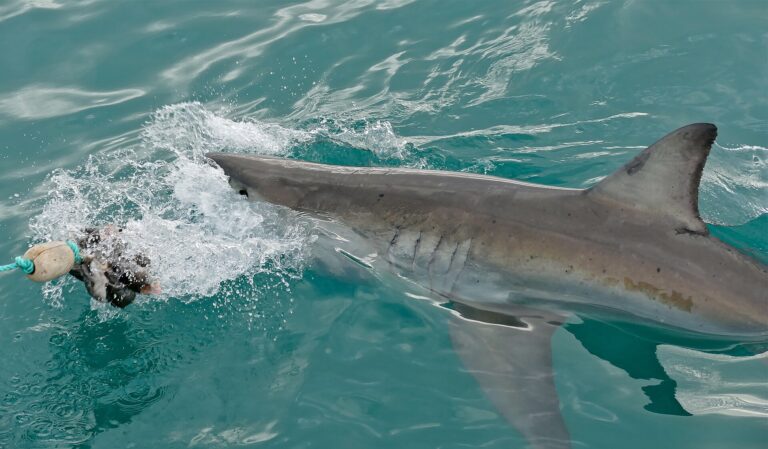
The largest known species of shark, C. megalodon, might have reached a maximum length of 67 feet.
Apex predator, very feisty, a serious Fish
Down here in Florida the lifeguards mention bulls far more than great whites. We kayak the Indian River Lagoon most weekends, so finding out it’s a nursery has me looking at those dark shadows differently.
Kayaking there is low risk. Most of what you’d see in a nursery lagoon is young bulls rather than big adults. I’d still keep my hands in the boat when the water turns murky after rain.