
How Do You Survive A Shark Attack?
3 min read
Last Updated on November 24, 2026 by Otis Mako
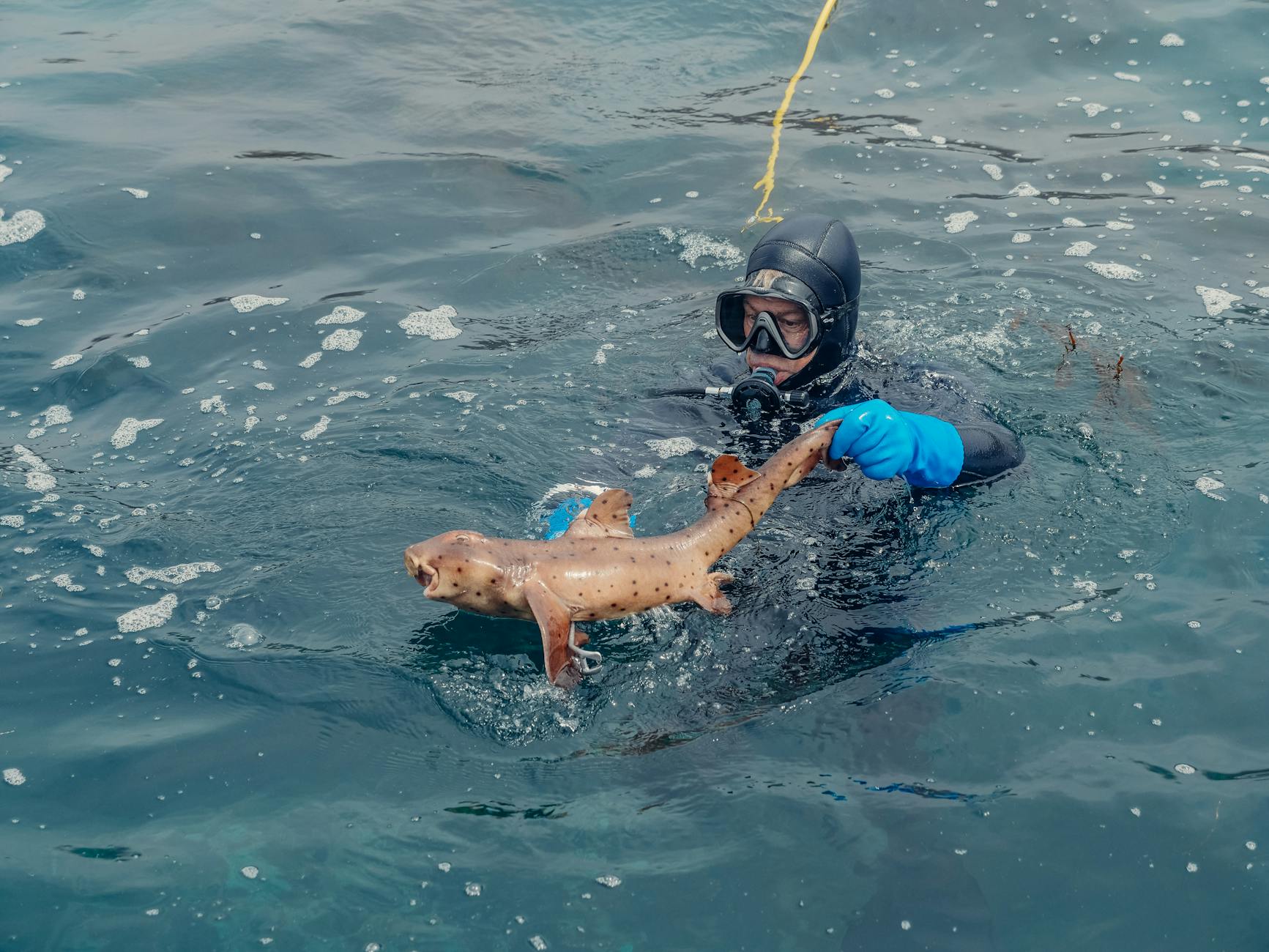
We hope it never happens to you, but there are things that work if a shark comes after you, and things that get people killed.
Part of our guide: Shark Attacks Guide.

Not long ago we brought you the true story of John Craig and the Tiger Shark. It ended well and the diver was not hurt. It could easily have gone the other way, as it did for another diver, Tony Lee, who was preparing for an annual open ocean swim off Hawaii when a 12-foot tiger shark grabbed him by both feet and dragged him under.
Sharks do not set out to eat people, and we hope you never have to fight one off. But wild animals are unpredictable, and the two things people most often plan to do are playing dead and swimming away. Neither of them works.
How a typical shark attack happens
The chances of a shark attacking you are minimal. There are more than 500 species of sharks, and fewer than 20 of those have ever been documented attacking a human.
Sharks are not after human flesh, but they do bite their prey first to work out what it is. That exploratory bite can be fatal to an average human being, which is why so many survivors are left with injuries to a limb rather than anything worse.
The best way to avoid an attack is to stay out of a shark’s feeding zones: murky water, harbour entrances, and anywhere with heavy fishing activity. Spearfishers should be especially careful, because some species will come clean out of the water to take a catch and hurt whoever is holding it.
What could you do to survive a shark attack?
If you spot a shark and it has not spotted you, swim away quickly and quietly without splashing, and get to safety. If it has spotted you, here are a few things to do, and not do.
1. Do not play dead
This works for some wildlife, bears among them. It will never work with a shark, which will happily rip apart something that is not moving. Remember that this is not a bear.
2. Do not panic
Easier said than done, but doable. Stay calm and do not make sudden erratic movements that splash the water. Most people panic and try to swim away, and sharks chase fleeing targets. That is why so many bites land on the feet and legs.
3. Reduce the angles of attack
Sharks circle their prey looking for a weak point. Giving them fewer angles to come in from might save you. Instead of turning your back or your feet towards the shark, keep eye contact and back slowly towards a reef or a boat. Fend it off with an object if you have one in your hand.
4. Fight the shark
Sounds idiotic, but this may just save you. Use whatever you have: spear guns, poles, a snorkel, a camera. In the John Craig story, he kept his eyes on the shark and kept it at bay with his speargun even while swimming.
Improvise as soon as you can see the shark is committed to biting. If you have nothing, you may have to use your bare arms, though that is a last resort because it puts your hands near the mouth.
5. Attack the sensitive parts
Aim for the eyes and the gills. Punching underwater is difficult, so claw repeatedly rather than swinging.
In the story of Tony Lee, the shark had already torn off part of his leg, so he did the only thing left to him. He dug his index finger into the eye socket, behind the eyeball, and pulled until the eye ripped out. Only then did the tiger shark let go.
“It grabbed both of my legs, and at first I thought just for a second that it was my friend, and he was just messing with me, but then I felt the horrific pain.” Tony Lee.
The snout is often named as another sensitive spot, but opinions differ on that one, because the mouth sits just underneath it and putting your hands anywhere near the mouth is a bad idea. Punching the snout and clawing at the eyes and gills will usually make a shark back off, or at least surprise it long enough for you to get clear.
6. Get to safety
Even if the shark retreats, get out of the water as fast as you can, because they tend to come back. Swim for shore or call out to any boats nearby. Then get medical treatment for any bite, however small it looks.
An encounter with a shark can go either way. John Craig escaped unhurt. Tony Lee had one leg amputated and the other badly damaged.
Bring sharks home
Love what you read? Browse our shark merchandise store for gear inspired by these animals:
Every purchase supports more shark content on this site.
Got a shark photo of your own? Send it to us and we may post it here and on our Facebook page, with your name on it. Share your shark photo


Good to know information.
Good to know. As beautiful as sharks are I would much rather not meet one in the open water.
great info love sharks but hope i never have to run into one
Good to know. I hope I never need to use these ideas though!
Wow hope I never have to put in practice these tips
I hope and pray I never have to encounter one in the open water. I would probably panic and forget everything I read here!
Don’t play dead. BUT don’t move around either…like excuse me sir, what/ how