
From The Ocean To The Soup Bowl: The Cold Hard Facts About Shark Fin Soup
5 min read
Last Updated on July 27, 2026 by Otis Mako

Part of our guide: Shark Conservation Guide.
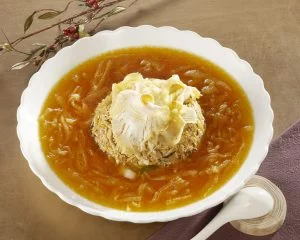
Since the early 1980s the shark fin soup industry has grown in leaps and bounds, to the detriment of sharks and our oceans. People still fear sharks out of all proportion, while the market for their fins has grown into a multi-billion dollar industry. The apex predator has far more to fear from us than we do from it, and that’s putting it lightly.
The usual objections run like this: we eat other kinds of meat, only the rich eat shark fin soup, and sharks live in the ocean so their deaths change nothing on land. Here is what the trade actually involves and what it has done to shark populations.
How It All Started
Shark fin soup is a thick soup or broth that originated in China and is made with shark fin.
The earliest reference to it goes as far back as the Song Dynasty in AD 968, a prosperous era of rich culture and elaborate cooking. The wealthy were keen on serving guests unfamiliar delicacies. They would serve camel humps and bear paws, often wasting the rest of the animal.
The first time shark fin soup was served, an emperor had a banquet and, in a bid to show how powerful, generous and wealthy he was, he ordered the dish served to all his guests. Since sharks were seen as dangerous to catch and kill, it pleased the emperor to impress his guests with such a rare treat.
To date it remains a delicacy, an integral part of Chinese tradition and a ritual symbol of wealth and luxury for display at important events. For this reason it is commonly seen on the menu at weddings and banquets. In fact, it is commonly said that if a groom’s family cannot afford shark fin soup at the wedding party, the bride’s family will conclude that the groom is not worthy to marry their daughter. The soup is very popular in Vietnam and Japan too.
In other words, it is a status symbol, and a gesture of generosity from the host to family and friends.
The Steps For Making Shark Fin Soup
Shark finning: extracting the main ingredient
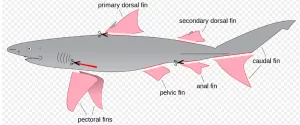
Once the shark is caught, the fins are sliced off and the fishermen dump the often still-alive fish back into the ocean. The shark is immobilized at that point and sinks slowly to the bottom of the sea, bleeding and drowning. It becomes an easy target for other predators on the way down.
Marketing and sale of the harvested fins
What drives the shark fin market is the money these fishermen can make internationally. Shark fins are the most expensive seafood product going, and the larger the fin the better. ‘Trophy’ fins, the pectoral fins of whale sharks, can sell for as much as $20,000 each.
The soup is not cheap either. A small bowl commonly costs upwards of $100, and up to $2,000 depending on the shark species and the restaurant. Those prices mean fishermen and middlemen will keep killing sharks wherever they find them. Some of them are ruthless enough to operate like gangs, tolerating no outside interference with their “business.”
Coupled with the increased economic prosperity in many Far Eastern countries, demand for shark fin soup is still immense.
Shark meat itself is not worth much, which is why the rest of the shark goes overboard. Other parts do carry some value: the skin for shagreen leather, plus the liver oil, cartilage and blood, mostly used in medicines and supplements.
Preparing the soup
Shark fin is sold frozen or dried, with the dried type sold whole or in shredded strips. The fins are usually treated with hydrogen peroxide to improve the color and make it more appealing to consumers.
Strangely enough, the fin itself has little or no flavor. It is made of cartilage and adds a crunchy, gelatinous bulk to the soup, sliced into long thin noodle-like strips. The flavor comes from chicken and ham.
There are many beliefs about the “many benefits” of eating shark fin soup. In traditional Chinese medicine it is held to improve blood circulation and the essential life force of the consumer. Lovers of the soup also claim it improves your kidneys, lungs and bones. There is no proof for any of it. Shark meat is not recommended for human consumption at all, because its mercury levels are extremely high compared with other fish, and young children and pregnant women are advised to avoid it completely.
The Global Impact Of Shark Fin Soup On Shark Populations
As more plates of shark fin soup are consumed, more shark species become threatened. A few figures show the scale of it:
- Despite conservation efforts, up to 125 countries still trade in the international shark products market.
- Compared to bony fish, sharks are particularly vulnerable to overfishing because of their slow growth, late sexual maturity and low rates of reproduction. Most species produce a few pups a year, not the thousands or millions of offspring other fish manage.
- The IUCN has stated that about one third of all open-ocean shark species are threatened with extinction.
- Actual annual shark catch numbers are still a mystery, since most of the trade happens on the black market.
- Sharks have been on earth for around 450 million years. At the current rate of killing, circa 80 to 100 million sharks a year and about 25 million of those threatened species, humans are in a race to wipe them out.
- Marine surveys show scalloped hammerhead populations down by over 97 percent, bull sharks over 99 percent and tiger sharks more than 97 percent, and those are only a few of the species affected.
The Global Impact Of Shark Fin Soup On Marine Ecosystems
Marine ecosystems sit on a delicate food chain that is easily distorted. Take out the top predators and you get a ripple effect that can take decades to stabilize, and researchers are already seeing what the decimated shark population is doing to the oceans.
As sharks decline, the animals they eat increase. Ray numbers go up, and the rays in turn eat more of their own prey, scallops. The same pattern is showing up everywhere sharks used to thrive.
Conservation And Enlightenment In Recent Years May Save The Remaining Sharks
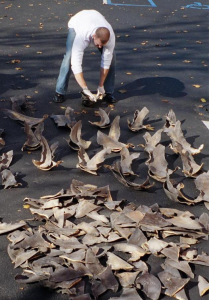
The literal meaning of the soup’s Chinese name is “fish wing”, so it is only recently that much of the Chinese general populace learned that shark fin is the main ingredient, or that the fins are cut off and the sharks left to die slowly.
Years of work by campaigners and authorities has improved awareness of what shark finning does. Organizations like the IUCN, Fins Attached and the Sea Shepherd Conservation Society are at the forefront of that fight. Many third generation citizens of countries known for consuming shark fin soup now pledge not to serve it, even at their weddings. There are reports that global demand for shark fins has fallen over the last five years, though the figures are not yet definite.
The National Oceanic and Atmospheric Administration (NOAA) also works on conservation for sharks and other marine life.
Many countries have banned the sale and consumption of shark fins, though loopholes in the laws mean the black market still thrives.
Chefs are also cooking alternatives that produce the same texture. These “mock shark’s fin” dishes started in Hong Kong in the 1970s and are made with chicken, pig skin, vermicelli and similar ingredients.
Shark fin has no proven health benefit and carries high mercury levels, and the animal it comes from is thrown back in the water to die for the sake of one dish.
Got a shark photo of your own? Send it to us and we may post it here and on our Facebook page, with your name on it. Share your shark photo






Shark finning is cruel and barbaric.
the chinese have long been responsible for the destruction of species. they dont care how they get their animal parts and create the market for them. they have no respect for our planet or the creatures in it and live in a permanent smog
We must stop this cruel finning. It is unsustainable at 100 million sharks finned and killed each year.