
130+ Shark Species on the Great Barrier Reef: A Diver’s Guide
4 min read
Last Updated on May 14, 2026 by Otis Mako
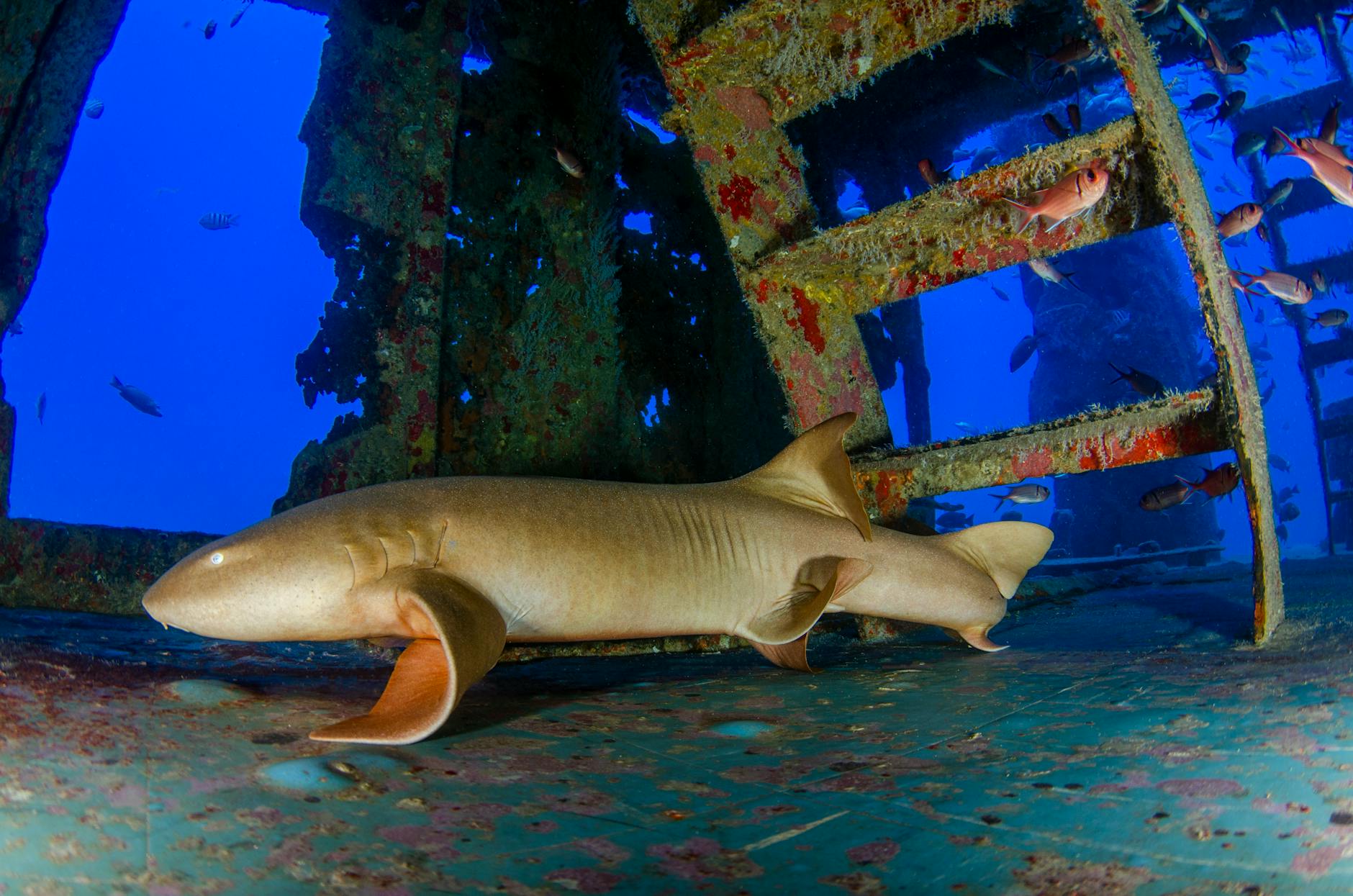
The Great Barrier Reef supports more than 130 shark species across its 344,000 square km range, with reef sharks visible on essentially every dive, tiger and hammerhead aggregations at offshore reefs, and a strong management framework under the Great Barrier Reef Marine Park Authority.
Part of our complete Shark Species Guide.
Common shark species you might encounter
Species commonly recorded or sighted in the region:
- Grey reef shark (Carcharhinus amblyrhynchos) The most commonly encountered shark on outer reef dives; territorial display behaviour is famous. IUCN: Endangered.
- Whitetip reef shark (Triaenodon obesus) Resident under ledges and on bommie dives across the reef. IUCN: Vulnerable.
- Blacktip reef shark (Carcharhinus melanopterus) Common in shallow lagoons and reef flats. IUCN: Vulnerable.
- Tiger shark (Galeocerdo cuvier) Common at offshore Coral Sea sites like Osprey Reef; occasional inner reef sightings. IUCN: Near Threatened.
- Scalloped hammerhead (Sphyrna lewini) Schools at North Horn (Osprey Reef) and far northern reefs. IUCN: Critically Endangered.
- Bull shark (Carcharhinus leucas) Common in Queensland estuaries; tolerates the Cairns and Townsville river systems. IUCN: Vulnerable.
- Wobbegong sharks Ornate, spotted, and tasselled wobbegongs across reef habitats. IUCN: Various.
- Epaulette shark (Hemiscyllium ocellatum) The famous walking shark of the GBR reef flats; harmless to humans. IUCN: Least Concern.
- Silvertip shark (Carcharhinus albimarginatus) Outer Coral Sea reef pinnacles. IUCN: Vulnerable.
Attack frequency and statistics
The Great Barrier Reef itself sees very few unprovoked attacks. Queensland statewide records an average of around five to ten attacks per year per the Australian Shark-Incident Database, with most cases on populated southern beaches (Gold Coast, Sunshine Coast) rather than on the offshore reef. The reef itself is among the safest in-water places in Australia.
Most reef shark species (grey reef, whitetip, blacktip) are not aggressive to divers. Bull sharks in Queensland estuaries and rivers (Brisbane, Sydney’s Parramatta, Townsville) account for the majority of mainland attack cases.
Best beaches and dive sites for spotting sharks safely
Notable sites:
- Osprey Reef and North Horn (Coral Sea liveaboard): baited shark dive with grey reef sharks and silvertips.
- Ribbon Reefs (Cod Hole): grey reef and whitetip on classic Cairns liveaboards.
- Lizard Island: reef shark sightings on most dives.
- Heron Island and Lady Elliot Island (southern reef): reef shark snorkel, manta rays, turtles.
- Magnetic Island, Whitsundays: coastal reef shark sightings.
Seasonal patterns
GBR diving is good year round. The dry season (April to November) brings clearer water and calmer seas. The wet season (December to March) brings warm water, plankton blooms, and increased pelagic activity. Bull shark river penetration in Queensland estuaries peaks in summer wet season.
Conservation status and regional organisations
The Great Barrier Reef Marine Park, declared in 1975, is one of the largest protected marine areas in the world. The Great Barrier Reef Marine Park Authority manages zoning that protects critical shark habitat. Queensland’s Shark Control Program (drum lines and nets at Gold Coast and Sunshine Coast beaches) is controversial and is gradually shifting to SMART drumlines.
Research is led by James Cook University, the Australian Institute of Marine Science, and the GBR Foundation. The species-level decline of grey reef sharks across the GBR has been documented since the 2000s; current population estimates show reef sharks at around 25 percent of their pre-fishing baseline.
How to stay safe
GBR reef diving is among the safest big-shark diving in the world. Grey reef shark territorial displays (arched back, lowered pectorals, exaggerated swimming) are a warning signal: back away calmly. Avoid spearfishing where shark dive activity has acclimated animals to humans.
Frequently asked questions
Are there sharks on the Great Barrier Reef?
Yes, more than 130 species. The most commonly encountered on reef dives are grey reef, whitetip reef, and blacktip reef sharks. Tigers, hammerheads, and bulls are also present in specific habitats.
Is it safe to dive the Great Barrier Reef?
Yes, statistically very safe. Reef shark species are not aggressive to divers under normal conditions. Most Queensland shark attacks happen on populated southern Queensland beaches (Gold Coast, Sunshine Coast) rather than on the offshore reef.
Can you dive with tiger sharks on the Great Barrier Reef?
Yes, especially at offshore Coral Sea liveaboard sites like Osprey Reef and the Great Detached Reef in the far north. The reef-proper tiger encounters are less reliable.
What is a walking shark?
The epaulette shark (Hemiscyllium ocellatum) is a small bottom shark found on Great Barrier Reef flats that uses its pectoral and pelvic fins to walk across exposed reef at low tide. It is harmless to humans, popular in aquariums, and a famous Australian endemic species.
What is North Horn at Osprey Reef?
North Horn is a famous shark dive at the northern end of Osprey Reef in the Coral Sea, accessed by liveaboards from Cairns. The site runs baited shark dives with grey reef sharks and silvertips in clear deep water on a wall.
Are reef sharks declining on the GBR?
Yes. Multiple population studies show grey reef shark numbers across the Great Barrier Reef are at around 25 percent of their pre-fishing baseline. Reef sharks have been particularly hit by global pelagic fisheries and historical Queensland commercial fishing. The species was uplisted to Endangered on the IUCN Red List in 2020.
For more on species mentioned here, see our complete shark species guide. For attack statistics worldwide, see our shark attacks pillar, and for what is being done to protect these animals, our shark conservation hub.
By Otis Mako. Last updated 13 May 2026.
Got a shark photo of your own? Send it to us and we may post it here and on our Facebook page, with your name on it. Share your shark photo


Does bleaching hit the reef sharks directly, or is it more that the fish they eat disappear along with the coral?
Mostly the second, I think. The sharks lose shelter and prey as the reef breaks down, though fishing has done more damage to their numbers so far.