
What Is National Geographics SharkFest?
3 min read
Last Updated on July 27, 2026 by

SharkFest is National Geographic’s answer to Shark Week, and its biggest selling point is length. Discovery’s Shark Week runs for seven days. National Geographic stretches its shark programming across roughly six weeks of summer, so if you cannot get enough shark documentaries, this is the one that lasts most of the season.
What SharkFest actually is
SharkFest is an annual block of shark-focused documentaries and specials produced and broadcast by National Geographic. It first launched in 2012, which made the 2022 edition its tenth year. The 2022 event began on Sunday 10 July. You can find the full breakdown on our SharkFest dates page.
The programming runs across several channels and platforms in the Disney family, so there is no single place you have to be. SharkFest content airs on National Geographic, Nat Geo Wild and Disney XD, and streams on Disney+. That spread is part of how National Geographic fills six weeks: it staggers premieres and rebroadcasts across the schedule rather than packing everything into one channel.
How much content you get
In 2021 alone, SharkFest delivered around 60 hours of programming, including 21 new premieres, and there are now ten seasons of back catalogue behind that. The format is varied: feature-length specials of around 90 minutes, shorter documentaries, segments built around viral shark footage, and science-led films about shark research and behaviour.
Celebrity involvement features here too. SharkFest 2021 included Shark Beach with Chris Hemsworth, in which the actor explored shark safety and conservation in his native Australia. Like Discovery, National Geographic uses a familiar face to draw a wider audience toward the science.
SharkFest versus Shark Week
The two events are often compared, and they genuinely complement each other. Here is how they differ:
- Length. Shark Week runs for 7 days. SharkFest runs for roughly 6 weeks, so you get far more shark content spread across the summer.
- Broadcaster. Shark Week is a Discovery Channel event, streaming on Discovery+. SharkFest is a National Geographic event, streaming on Disney+.
- Timing. The two often overlap or sit close together in July, which means dedicated fans can watch shark programming for most of the summer by switching between them.
- Tone. Both mix spectacle with science. National Geographic’s brand leans slightly more toward natural-history documentary, while Discovery has historically leaned more on event-style specials.
If you love Shark Week, SharkFest is the same appetite fed for longer. When you finish binge-watching one, switch to the other. For Discovery’s event, see our guide to when Shark Week airs.
The conservation mission behind SharkFest
SharkFest is entertainment, but National Geographic frames it around a conservation purpose: teach the public about sharks, and reduce the fear and the misconceptions.
The numbers behind that mission are sobering. Oceans cover about 70 percent of the Earth’s surface, yet only a small fraction of the sea is meaningfully protected. Sharks face pressure from pollution, habitat loss, overfishing and accidental capture as bycatch. Humans kill an estimated 80 to 100 million sharks every year, roughly 25 million of them threatened species, and a 2021 study in the journal Nature found that oceanic shark and ray populations had collapsed by roughly 71 percent since 1970. The IUCN now lists more than a third of all shark and ray species as threatened with extinction.
Against that backdrop, the fear problem matters too. Worldwide there are usually fewer than 10 fatal unprovoked shark bites in a typical year. A person is far more likely to be harmed by everyday risks than by a shark. SharkFest, like Shark Week, uses the pull of dramatic footage to lead viewers toward that more accurate picture.
What you can learn from SharkFest
A six-week event has room for depth. Where a single special only has time for the headline predators, a long run can cover the less famous sharks too: the filter-feeding whale shark and basking shark, the deep-water species rarely caught on camera, and the small, harmless reef sharks that make up most of the more than 500 known shark species.
SharkFest documentaries also spend time on the science itself, showing how researchers tag sharks, track their migrations by satellite, and study their senses, including the electroreceptive organs called the Ampullae of Lorenzini that let sharks detect the faint electrical fields of nearby animals. Watched with that intent, the event works as natural history rather than spectacle.
Make the most of shark season
Between SharkFest and Shark Week, summer is shark season for documentary fans. Check the schedules in advance so you do not miss the premieres you care about, and treat the long SharkFest run as a chance to work through the back catalogue rather than trying to watch everything at once. If the programming leaves you wanting to do something concrete for sharks, you can adopt a shark symbolically through the World Wildlife Fund.
Got a shark photo of your own? Send it to us and we may post it here and on our Facebook page, with your name on it. Share your shark photo
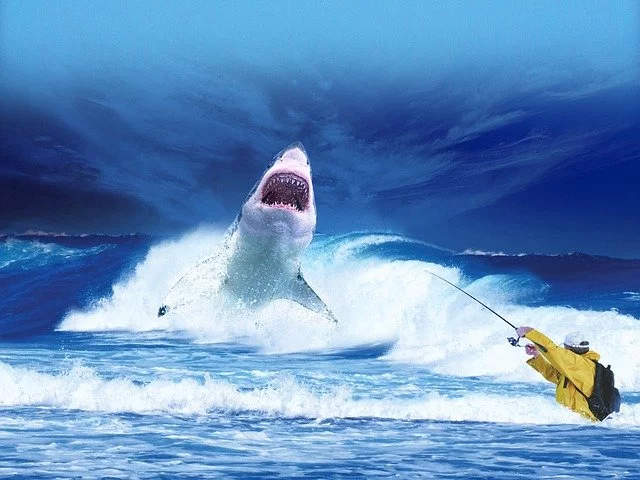


Waiting for the next!
My parents never sit through anything about sharks, but they watched Shark Beach with Chris Hemsworth last summer. Is there anything like that on this year’s schedule?