
Megamouth Shark washed up on Philippines beach
4 min read
Last Updated on May 18, 2026 by

A dead megamouth shark, one of the rarest large fish in the world, washed up on a beach in the Philippines on 11 June. It matters because the megamouth is so seldom seen that every single specimen is a scientific event. The likely cause of this death, entanglement in fishing gear, also points to a quiet, growing threat to a species we barely understand.
What happened at Gubat
The shark was found dead by the fisherfolk of Gubat, a coastal town in Sorsogon province at the southern tip of Luzon, in the Bicol region of the Philippines. While the exact cause of death was not confirmed, officials believed it was probably entanglement in nets or ropes. The news came from Nonie Enolva, a spokesperson for the Philippine Bureau of Fisheries and Aquatic Resources. The specimen measured about 15 feet long, which suggests it was a mature adult.
Just how rare the megamouth is
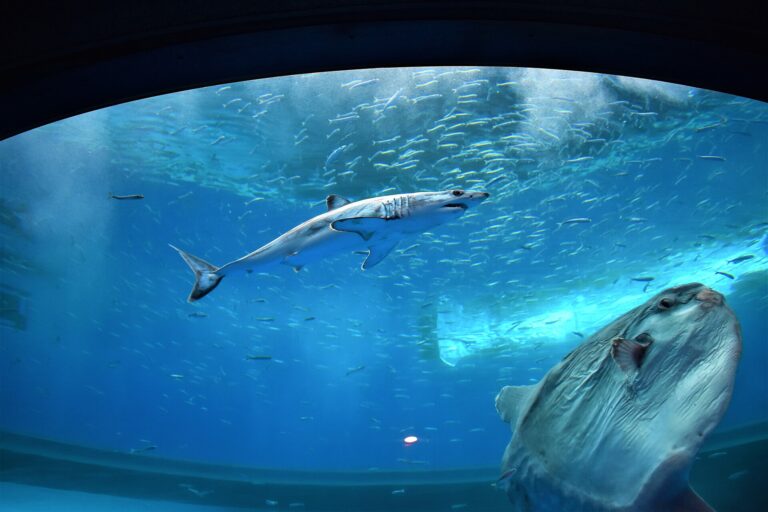
The megamouth shark (Megachasma pelagios) is one of the great mysteries of the sea. According to the Florida Museum of Natural History, only around 269 megamouth sharks had ever been confirmed worldwide. To put that in perspective, a common coastal shark might be encountered that many times in a single afternoon. The megamouth is so rarely seen that it is genuinely possible for a marine biologist to spend an entire career without observing one.
Part of the reason is how recently it was discovered. The megamouth was completely unknown to science until 1976, when one became tangled in the sea anchor of a United States Navy vessel near Hawaii. The species had never been documented before that moment, an extraordinary thing for an animal that can grow to around 16 feet and weigh up to 2,700 pounds. It is a reminder of how little of the deep ocean we have actually explored.
Why so many turn up in the Philippines
Two places dominate megamouth records: Taiwan has the most confirmed sightings, and the Philippines is second. The reason is not that megamouths are abundant there, but that they are caught there. Most sightings are bycatch, animals accidentally hauled up in fishing gear set for other species. The shark found at Gubat was the third megamouth recorded washing ashore in the Bicol region. Scientists link this to the rich marine life of the area: Bicol’s waters draw large fish, so fishermen work deeper and with more varied gear to catch them, and a deep-water filter feeder like the megamouth gets caught or entangled in the process. The strandings are less a sign of a thriving population than a sign of where deep fishing effort and a deep-living shark overlap.
A life lived in the dark
The megamouth is a creature of the deep. It has been associated with depths far down in the water column, well into the dark zone where sunlight never reaches, and it is thought to migrate vertically, rising toward the surface at night and sinking by day to follow its food. That food is plankton and small shrimp-like creatures: the megamouth is one of only three filter-feeding sharks, alongside the whale shark and the basking shark. Its enormous, rubbery mouth, the feature that gave the species its name, is lined with small teeth and is built for straining tiny prey from huge volumes of water, not for biting. Megamouths are believed to be slow-growing and long-lived, with estimates suggesting they may reach around 100 years of age if they avoid nets and ropes.
Why a stranded carcass is worth saving
Everyone would prefer to study a megamouth alive, but with a species this elusive, a carcass is a rare and precious source of data. Researchers planned to preserve the Gubat specimen, either through taxidermy or a preservation solution, so it could be examined and kept for future study. Strandings are often the only chance scientists get to measure a deep-sea animal, inspect its stomach contents, and learn about its anatomy and reproduction. Around the world, marine strandings are tracked closely because they act as an early-warning system, flagging disease, pollution, or, as here, the impact of fishing gear.
How the megamouth compares to other filter-feeding sharks
It helps to place the megamouth alongside its two filter-feeding relatives, because all three solve the same problem in different ways. The whale shark (Rhincodon typus) is the giant of the group at around 12 metres, a slow surface cruiser that strains plankton in warm, sunlit seas and is often seen by divers. The basking shark is the second-largest fish, also a surface feeder, swimming open-mouthed through cool, plankton-rich coastal water. The megamouth is the odd one out: smaller than both, far rarer, and a creature of the deep dark rather than the surface. Where whale sharks and basking sharks are regularly observed, the megamouth stays hidden, which is why it took until 1976 for science to even know it existed. All three are gentle, all three are harmless to people, and all three depend on healthy plankton, the base of the entire ocean food web.
The bigger lesson
The recurring threat in this story is bycatch. A shark that has survived in the deep ocean for tens of millions of years can still be killed by a net intended for something else. As fishing pushes into deeper water, animals we have barely begun to understand are paying the price. Protecting a species like the megamouth means tackling that accidental capture, through better gear, smarter regulation and more research. To learn more about this extraordinary animal, read our full megamouth shark species profile.
Got a shark photo of your own? Send it to us and we may post it here and on our Facebook page, with your name on it. Share your shark photo



Do fishermen get anything for reporting one? If there’s no reason to call it in, I’d guess plenty of megamouths caught as bycatch never get counted.