
Teenage boy was Attacked by a Great White during fishing trip
4 min read
Last Updated on May 18, 2026 by Otis Mako

A teenage boy fishing off a South Australian beach was bitten on the leg by a small great white shark, after he caught it and grabbed its tail to pose for a photo. He recovered well, and the story is a near-perfect example of a “provoked” shark bite: an incident that happened not because a shark hunted a person, but because of what the person did with the shark.
What happened at West Beach
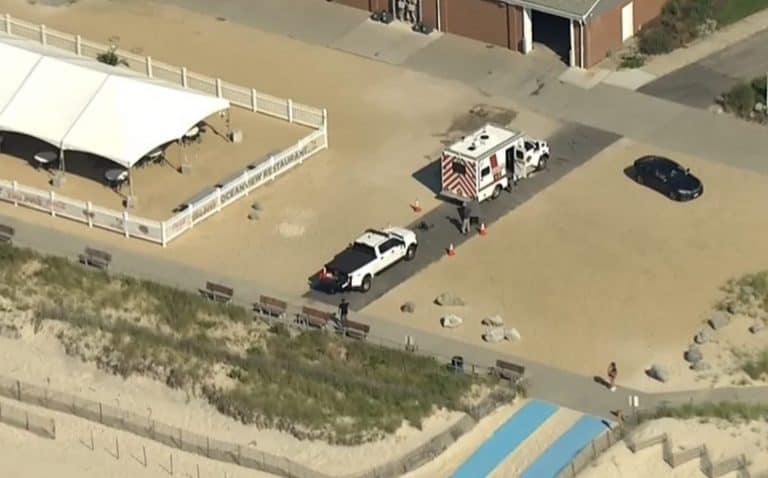
The incident took place at around 1:40 pm on a Sunday at West Beach, near Adelaide in South Australia. Sixteen-year-old Nathan Ness was fishing with his father, Michael, and two younger siblings when he hooked and reeled in a shark. Wanting a photo of his catch, he picked the shark up by the tail. As his sister Megan described it, “He thought it would be cool if he held the tail so he could get a photo with it, and then the shark turned around and bit his leg.”
His father’s account is vivid and unflinching. He saw the shark latch onto Nathan’s leg and saw “bits of fat squish out”. When Nathan screamed, Michael Ness sprang into action, prying the shark’s jaws open by hand until it let go. They drove the boat back to shore while Nathan, remarkably, called the ambulance himself. South Australian paramedics treated him at the scene and took him to the Royal Adelaide Hospital, where he was in stable condition. The shark, identified as a great white, was only around five feet long, and Nathan was left with two large gashes that needed stitches. His father said the boy was not fazed and was already asking when they could go fishing again.
This was a provoked bite
It is important to be clear about what kind of incident this was. The International Shark Attack File, run by the Florida Museum of Natural History, distinguishes “unprovoked” bites, where a shark approaches a person doing nothing to it, from “provoked” bites, where human activity such as catching, handling or feeding the shark triggered the contact. Picking a hooked great white up by the tail to pose for a photo falls squarely into the provoked category. The shark was not hunting Nathan; it was a stressed, hooked, exhausted predator being lifted out of the water, and it did what a frightened animal with rows of teeth does. The honest framing matters, because calling this a random “attack” feeds a fear of sharks that the facts do not support.
Great whites in South Australian waters
South Australia is genuine great white country. The great white shark (Carcharodon carcharias) is found around much of southern Australia, and the state’s waters, including the seas around Adelaide, are part of its range. Local fishermen Brodie and Colin North noted that catching a shark off West Beach is actually unusual, with Colin saying he had never seen it happen there before. Brodie added a sober point: Nathan was lucky the bite missed a major artery, and “they’re lucky they got away with a few stitches considering the size of the shark and how aggressive they are when they’re pulled onto a boat”. A five-foot great white is a young animal, but it is still a powerful one.
Why a hooked shark bites
This case shows exactly why so many fishing-related shark injuries happen. A shark on a line is not calm. It has been exhausted by the fight, it cannot breathe properly out of the water, and it is in a state of high stress. Lifting it, especially toward your own body, puts a frightened animal with no hands and a mouthful of teeth right next to you. Great whites in particular can twist their bodies with surprising power. The lesson is blunt: a shark you have caught is at its most dangerous in the moments you are handling it, not while it is swimming free in the sea.
How to handle a shark you catch
If you fish where sharks are present, a few rules keep everyone safer and treat the shark better:
- Never pick a shark up for a photo, and never grab one by the tail. Keep your body well away from the head.
- If you intend to release it, keep the shark in the water and remove the hook there using long-nosed pliers or a de-hooking tool.
- If the hook cannot be reached, cut the line as short as possible rather than wrestling the animal.
- Use barbless or circle hooks, which are easier to remove and reduce harm.
- Carry a basic trauma kit, including a tourniquet, on every boat trip, and know how to use it.
Reading the headlines sensibly
The report noted this was the sixth shark bite in South Australia in under a year, alongside three fatal attacks in the state over the same period, and that sightings had been rising. That sounds alarming, but context matters. Globally, unprovoked shark bites usually total fewer than 70 a year, and provoked incidents like this one are a separate category caused by human handling. A run of bites in one region is worth noting, but it does not change the very low risk to an ordinary swimmer. To understand how shark bites are categorised and why they happen, read our full Shark Attacks Guide.
Part of our guide: Shark Attacks Guide.
Got a shark photo of your own? Send it to us and we may post it here and on our Facebook page, with your name on it. Share your shark photo


My nephew is sixteen and I can picture him doing exactly this for a photo. I keep thinking about the dad prying the jaws open by hand.