
Shark Heroes V: Jacques Cousteau
3 min read
Last Updated on July 27, 2026 by Otis Mako
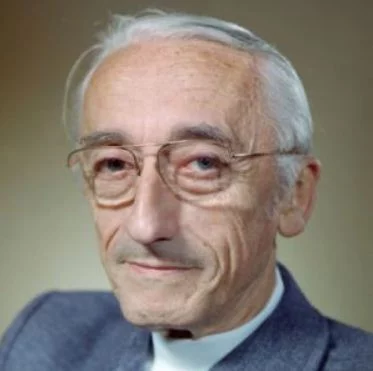
Jacques Cousteau (1910 to 1997) was a pioneer of ocean exploration.
Jacques Cousteau, or Jacques-Yves Cousteau in full, was a French naval officer, explorer, conservationist, filmmaker, inventor, scientist, photographer, author and researcher. He spent decades studying the seas and the life in them.
He sailed the world on his 130-foot ship, the Calypso, on missions to educate people about the ocean and change how they saw it.
Jacques Cousteau: Early Life
Jacques Cousteau was born in Saint-André-de-Cubzac, southwest France, in 1910, to Daniel and Élisabeth Cousteau.
As a young boy he loved swimming, and that became a lifelong passion for the sea and everything in it. He bought a movie camera while still young and taught himself what to do with it. He completed his preparatory studies in Paris at the Collège Stanislas, then enlisted in the French Navy, where he stayed for at least 25 years and learned to handle every kind of boat and vessel.
A car accident then cut short a promising career in naval aviation. Cousteau was badly injured and broke both his arms, and he nearly died. He could not continue on the military path, and the hope of becoming a naval pilot was gone. The accident sent him back to his first love, the ocean.
A major aspect of Cousteau’s work was to show that though some shark species could harm humans, most species are harmless.
Scientific and Marine Achievements
Marine Exploration
After his early exit from the Navy, and for the rest of his life, Cousteau sailed the world on the Calypso and filmed what he found. He was a pioneer on many fronts, and his work opened the way for the marine explorers who came after him.
If you name Cousteau for one thing, it is the first scuba gear, the “Aqua-Lung”, which he co-invented with an engineer during World War II. It was the first of its kind, it let divers breathe compressed air underwater, and it made deeper and longer investigation of underwater life possible.
Underwater Documentaries

Cousteau and his team went after a second, less obvious problem: getting underwater footage in front of the public. Their innovations let them film deep in the sea and share it worldwide, which produced the television series The Undersea World of Jacques Cousteau (1966 to 1976).
The series ran for a decade, and viewers watched real footage of the team travelling the world. Each episode took a different kind of sea creature. They filmed invertebrates, fish and marine mammals, and best of all, a lot of sharks.
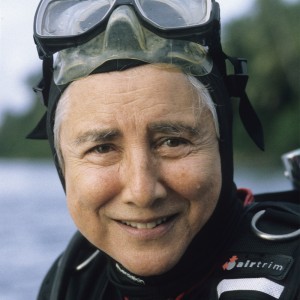
“Sharks” was the title of the first episode. It followed shark behaviour, with the Calypso sailing from Monaco through the Mediterranean to the Red Sea and then the Indian Ocean. Dr Eugenie Clark joined the crew for it, to study shark behaviour and test shark repellents.
The aim was to challenge the myths and put science-backed facts in their place.
Jacques Cousteau and his team are known to this day for filming the first ever underwater nature documentaries.
Cousteau’s shark work covered tagging, migratory patterns and repellent testing, among other areas.
Books And Films
Cousteau documented his work and findings in several books. The best known is his first, The Silent World: A Story of Undersea Discovery and Adventure (1953).
He also directed a number of nature films, one of them based on that book. The Silent World won the Palme d’Or at the 1956 Cannes Film Festival, and it remained the only documentary to win the Palme d’Or until Michael Moore took it for Fahrenheit 9/11 in 2004.
Jacques-Yves Cousteau: Awards
Some of the awards he gathered during his lifetime:
- Cross of War 1939 to 1945 (1945)
- National Geographic Society’s Special Gold Medal (1961)
- Commander of the Legion of Honour (1972)
- Officer of the Order of Maritime Merit (1980)
- Grand Cross of the National Order of Merit (1985)
- U.S. Presidential Medal of Freedom (1985)
- Induction into the Television Hall of Fame (1987)
- Commander of the Order of Arts and Letters
- Honorary Companion of the Order of Australia (26 January 1990)
His Death
The Calypso was accidentally rammed and sunk by a barge in Singapore Harbour on 8 January 1996. Cousteau set about raising funds for a new vessel, but died suddenly of a heart attack in Paris on 25 June 1997, aged 87.
His estate then fell into dispute among his survivors, though most of the legal arguments were settled by 2000.
His Legacy
Cousteau left at least 120 television documentaries, over 50 books, and an environmental protection foundation with about 300,000 members.
Got a shark photo of your own? Send it to us and we may post it here and on our Facebook page, with your name on it. Share your shark photo

He was legendary. How sad that his estate fell into dispute among his survivors.