
Ocean Ramsey: The Free-Diver, Shark Advocate, and Her Most Famous (and Controversial) Encounters
9 min read
Last Updated on November 8, 2026 by Otis Mako
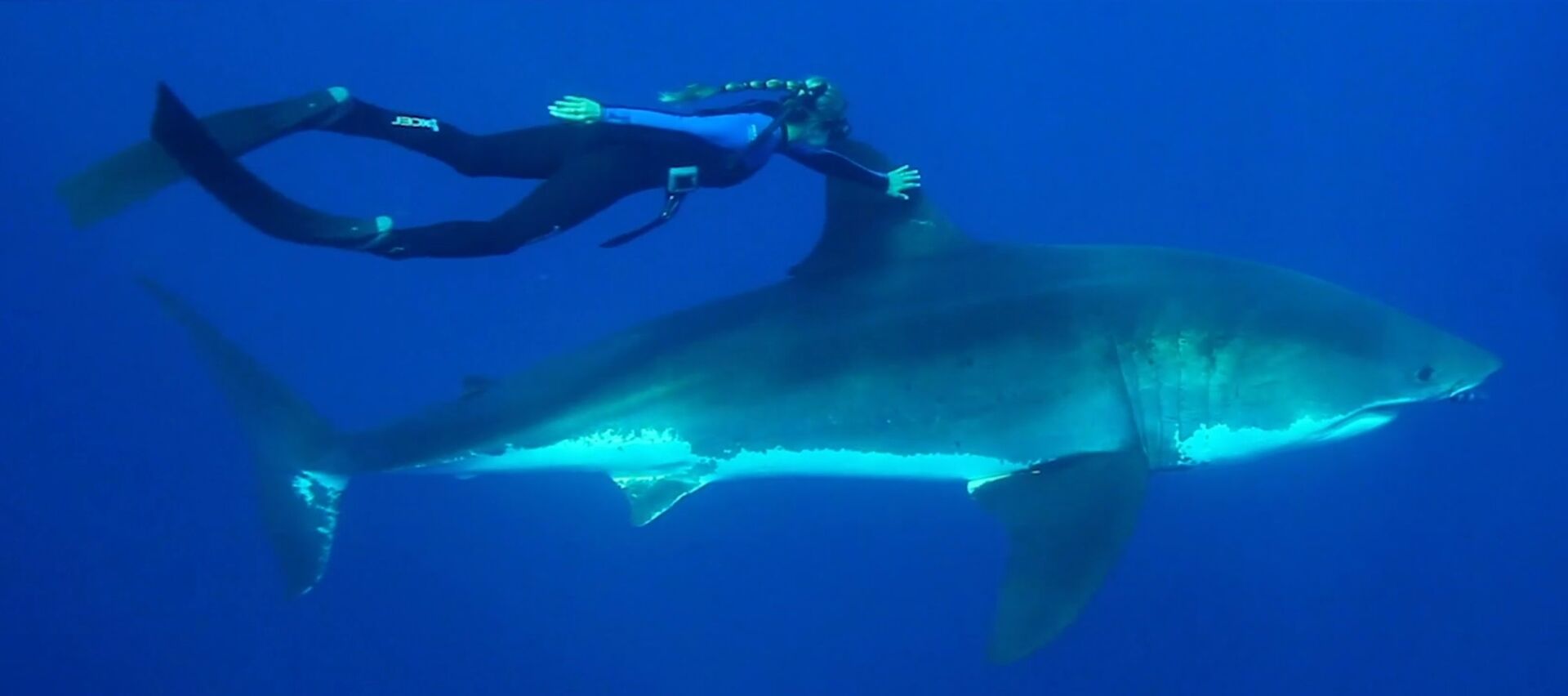
Ocean Ramsey is a Hawaiian marine biologist, free-diver, and shark conservation advocate who co-founded One Ocean Diving and One Ocean Research and Conservation in Oahu. She has worked with more than 30 shark species in the wild, became a global figure after a 2019 photograph showed her swimming alongside a 6 m great white near Oahu, and has campaigned for state and federal laws protecting sharks from finning and trophy fishing.
Key facts at a glance
| Full name | Ocean Ramsey |
|---|---|
| Born | 1987, Oahu, Hawaii |
| Profession | Marine biologist, free-diver, shark behaviour researcher, conservation advocate |
| Organisations | One Ocean Diving, One Ocean Research and Conservation, Water Inspired |
| Best known for | The 2019 Deep Blue encounter off Oahu |
| Notable books | What You Should Know About Sharks (2019, with Juan Oliphant) |
| Notable campaigns | Hawaii Act 51 (2021), the state law banning the intentional killing of sharks in Hawaiian waters |
| Free-diving rating | SSI free-dive instructor, certified shark and safety diver |
Who is Ocean Ramsey
Ocean Ramsey is a marine biologist by training and a free-diver by daily practice, based on the North Shore of Oahu. She co-founded One Ocean Diving in 2011 with her partner Juan Oliphant, a Hawaiian photographer who shoots most of her well-known images. The operation runs daily expeditions off the leeward coast of Oahu where guests free-dive with pelagic species: Galapagos sharks, sandbar sharks, tiger sharks, hammerheads, occasional oceanic whitetips, and on rare days, great whites.
Her message, repeated in every interview, is that sharks are calm, individually recognisable animals that can be approached without a cage and without bait by divers who know how to read body language. She has spent the last 15 years building a public archive of in-water footage and identification photos to make that case.
How she got there
Ramsey was born in Hawaii in 1987 and grew up in the water on Oahu. She has described an early encounter with a curious shark as the moment her view of the animals flipped from feared to fascinating. She trained as a marine biologist, picked up free-diving and scientific diving certifications in her early 20s, and built the early business by chartering small boats and writing field notes on individual sharks she could re-identify.
She has also worked as a stunt diver, a model, and a safety diver on shark documentaries. Those credits gave her on-screen visibility, but the conservation reputation came from the slow work: thousands of dives, year-by-year photo identification of returning sharks, and a willingness to talk to lawmakers and journalists who wanted a face for shark advocacy.
One Ocean Diving and One Ocean Research
One Ocean Diving is the commercial side: a small-boat operation that takes paying guests, usually six at a time, to free-dive without cages with the pelagic sharks of Oahu's leeward coast. One Ocean Research and Conservation is the non-profit arm, doing photo-ID surveys, tag returns, fin-tear catalogues, and behavioural notes that feed back into the broader research community. Together they have logged sightings of more than 30 shark species across nearly two decades, with the Galapagos shark and sandbar shark making up the bulk of regular encounters.
The dives are unbaited and run without cages or chum. Divers slip off the boat and wait. Sharks approach, circle, and leave on their own schedule. Guests are briefed on body language: a pectoral fin pointed down is curious, an arched back with a lifted snout means the shark wants more space, and an arched back combined with a body tremor is the cue to back off. The protocol is the same one Ramsey teaches in her free-dive courses.
The 2019 Deep Blue encounter
On 15 January 2019, Ramsey and Oliphant heard that a sperm whale carcass was floating off Oahu and drawing sharks in. They arrived to a scene already in progress. Tiger sharks were on the carcass, but the headline animal was a 6 m, 2,500 kg female great white the dive community had known for decades. Her name was Deep Blue. She had been identified in Mexican waters years earlier, recorded as one of the largest white sharks ever filmed.
Oliphant's photographs of Ramsey laying a flat hand on Deep Blue's flank ran on every major news desk in the world. The shot was striking: a calm woman, a calm shark, an animal that filled the frame, and no cage in sight. It went round the world within days and triggered a long debate about whether the dive was responsible behaviour or a stunt.
The criticism
Scientists and shark professionals split on the encounter. Critics, including some long-time white shark researchers, argued that touching the shark normalised contact, encouraged copycat dives by less experienced people, and risked habituating a federally protected species. Hawaii's Department of Land and Natural Resources opened a public discussion about whether the encounter complied with state and federal rules on harassment of marine wildlife.
Defenders, including Ramsey herself, made a different case. The shark was already accompanied by other people in the water by the time they arrived. The whale carcass was the only attractant. Ramsey said her hand on the flank was a calculated redirect to keep the shark's mouth away from cameras and divers in close water. She has consistently said she does not recommend that the public swim with great whites without a cage and that the conditions that day were specific to a well-known, satiated animal at a known feeding site.
The image changed the public face of great white encounters, and it did inspire people to mimic the touch without the context. It also put Hawaiian shark protection in front of a global audience.
Advocacy and policy work
Ramsey was the public face of the campaign that produced Hawaii Act 51 in 2021, a state law that bans the knowing capture, entanglement, or killing of any shark in Hawaiian state marine waters, with limited exceptions for traditional Hawaiian cultural practice, public safety, and permitted research. The bill passed both chambers unanimously and was signed by Governor David Ige in June 2021. It is one of the strongest state-level shark protections in the United States.
Beyond Hawaii, Ramsey campaigns against the global shark fin trade, against shark culls following individual incidents, and against trophy fishing tournaments that target large pelagic sharks. She supports CITES Appendix listings for endangered shark species, and her social channels work as a daily megaphone for those campaigns.
What she actually believes
Her position, stated the same way in interviews and in her own courses, is that sharks are individuals. Most species can be approached respectfully by trained divers. Almost all so-called shark attacks are mistakes or curiosity nips rather than feeding events. The biggest threats facing sharks are commercial finning, longline bycatch, retaliatory culls after rare incidents, and habitat loss, and the most effective response is policy: protected areas, fin bans, trade controls, and gear restrictions.
Her advice for people who want to help: cut shark fin products from any restaurant you frequent, choose sustainably caught seafood, support shark-positive tourism over shark-fishing tourism, and back local protection campaigns. She is on record saying she does not want every diver to swim with great whites. She wants every diver to understand that sharks are worth more alive in the water than dead in a soup bowl.
Books, films, and where to find her
- What You Should Know About Sharks (2019, with Juan Oliphant): an identification guide with behavioural notes for divers.
- The 2018 documentary She Is the Ocean, in which she appears.
- The 2025 Netflix documentary Shark Whisperer, which covers both her conservation work and the criticism of her methods.
- Daily content at oneoceandiving.com, plus Instagram and YouTube channels under @oceanramsey.
Fair criticisms and ongoing debates
Three critiques recur in the shark research community.
- Touching and riding sharks. Even when done by an experienced diver, contact carries some risk of stressing the animal and normalising contact for less experienced followers. Most scientific bodies recommend no-touch policies.
- The free-diving brand. Some critics argue the dives function as a branded product that uses science as marketing. Ramsey's counter is that the dives fund the research and protection work and that thousands of guests leave converted.
- Individual focus vs systems change. Heroes-led conservation can crowd out structural questions about industrial fishing. Ramsey has been increasingly explicit about pointing people to policy over symbolic gestures.
Related reading on We Love Sharks
- Shark names and beliefs in different cultures
- How to repel sharks: what actually works
- Shark tagging and the risks involved
- Shark attack videos in context
- Hammerhead shark complete profile
If you want to read Ramsey's book or build a shark library, our friends at the store stock the title alongside other authoritative shark guides in shark books and non-fiction shark books.
Who is Ocean Ramsey?
Ocean Ramsey is a Hawaiian marine biologist, free-diver, and co-founder of One Ocean Diving and One Ocean Research and Conservation. Based in Oahu, she runs unbaited, cage-free pelagic shark dives, contributes photo-identification data to the wider shark research community, and is a prominent public advocate for shark protection. She is the co-author of What You Should Know About Sharks (2019) and was the public face of Hawaii Act 51, the 2021 state law banning the intentional killing of sharks in Hawaiian waters.
What is Ocean Ramsey famous for?
She became globally known after a January 2019 encounter near Oahu, where photographs by her partner Juan Oliphant showed her free-diving next to Deep Blue, a 6 m, 2,500 kg female great white shark and one of the largest ever filmed. Those images ran worldwide within days and prompted a debate over the ethics of contact with protected species. Outside that single encounter, she is known for her 15-plus years of free-diving and behavioural work with more than 30 shark species.
Did Ocean Ramsey really swim with Deep Blue?
Yes. On 15 January 2019, Ramsey, Oliphant, and a small dive group were called to a sperm whale carcass off Oahu that had attracted tiger sharks and, unexpectedly, the well-known great white Deep Blue. Photographs from that day, including Ramsey laying a flat hand on the shark's flank, are verified, on the record, and widely covered by Associated Press and major news outlets. Ramsey has said her contact was a redirect to keep the shark's mouth away from divers, not a stunt for the camera.
Is swimming with great white sharks without a cage safe?
Not for most people, and Ocean Ramsey has said so repeatedly. The 2019 encounter happened in specific conditions: a known, satiated, identifiable individual at a feeding site, with experienced free-divers reading the shark's body language in real time. The general advice from her own free-dive courses and from the wider shark research community is to dive with white sharks from a properly engineered cage, with a vetted operator, and to never reach out and touch. The viral image is not a template for casual divers.
What does One Ocean Diving do?
One Ocean Diving is a small-boat charter on Oahu's leeward coast that takes paying guests on unbaited, cage-free free-diving trips with pelagic sharks (Galapagos shark, sandbar shark, tiger shark, hammerhead, occasional oceanic whitetips). It pairs with One Ocean Research and Conservation, the non-profit research arm, which contributes photo-ID surveys, fin-tear catalogues, and behavioural notes to the wider shark research community. The dives are run year-round, weather and shark presence permitting.
What conservation laws has Ocean Ramsey supported?
The headline result is Hawaii Act 51 in 2021, a state law that bans the knowing capture, entanglement, or killing of any shark in Hawaiian state marine waters, with limited exceptions for traditional Hawaiian cultural practice, public safety, and permitted research. The bill passed both Hawaiian legislative chambers unanimously and was signed into law in June 2021. Ramsey was the most visible advocate during testimony and public campaigning. She also supports CITES Appendix listings for endangered shark species and works against shark culls after individual incidents.
Has Ocean Ramsey ever been bitten by a shark?
She has not been seriously bitten in her professional diving career, despite thousands of in-water hours with more than 30 species. She has described small bumps and scrapes from close encounters with curious sharks but no recorded major injury. She credits this to body-language training, never diving with bleeding wounds or unsecured gear, the no-bait protocol of her operation, and reading the animal properly before approaching it.
Is what Ocean Ramsey does controversial?
Parts of it, yes. Most marine biologists agree on the broad conservation message (sharks are over-fished, finning is destructive, retaliatory culls are bad science). The disagreement is mainly about method: cage-free dives, occasional contact with sharks, and the personal-brand visibility of the work. Critics argue contact normalises behaviour that less experienced divers will copy. Defenders argue the work funds research and protection, and that the public attention has converted thousands of people into shark advocates. The debate is ongoing.
By Carey Baird. Last updated 14 May 2026. Estimated reading time: 11 minutes.
Got a shark photo of your own? Send it to us and we may post it here and on our Facebook page, with your name on it. Share your shark photo

Great example of a protecter of the creators creation, Ocean ! Can you imagine the love you have for ocean life having that same love for him!
Has anyone here actually done one of the cage-free dives on Oahu? I’m curious how long the body language briefing takes before anyone is allowed in the water.
i get the conservation side and the Act 51 work, but the hand on the shark still sits wrong with me. people copy what they see online and most won’t have her training.