Shark Attacks Woman on Pool Ring
3 min read
Last Updated on May 18, 2026 by
A woman survived a shark attack in Esperance, Western Australia, after drifting far offshore on an inflatable pool ring. The incident, on Sunday 6 February 2022, ended better than it could have: the shark knocked her into the water, circled her a few times, then swam off, and she made it back to shore alive. The story is a stark lesson in how a harmless beach toy can carry a swimmer into genuine danger.
What happened at Esperance
The woman had been floating on a pool ring when the wind and current carried her steadily away from the beach. After about half an hour she was roughly 650 feet, around 200 metres, from the shoreline. That is when the shark struck. It knocked her off the ring and into deep water, then circled the floating ring several times before leaving the area.
A bystander, Barry Brown, watched the whole thing unfold. The woman managed to swim back toward shore, leaving a trail of blood in the water, where Brown and other onlookers reached her. Brown drove her to hospital, where she was treated and recovered. Western Australia’s Department of Primary Industries and Regional Development Shark Response Unit closed nearby beaches the following Monday and recovered the woman’s pool ring. The shark itself was never positively identified, although a 10.8-foot great white was sighted in the area later that day.
Esperance and its shark history
Esperance is a coastal town on the south coast of Western Australia, known for brilliant white sand beaches such as Twilight Beach and the turquoise water of the surrounding bays. It is also, unfortunately, a place with a serious record of shark encounters. The waters off the south coast are cold, deep, and rich in marine life, and they support large populations of seals and sea lions. Those colonies are the natural prey of great white sharks, which is the main reason this stretch of coast sees more incidents than most.
Western Australia as a whole records a disproportionate share of the country’s serious shark encounters. Authorities there run one of the most active shark management programmes in the world, including beach closures, aerial patrols, tagged-shark detection receivers, and a public SharkSmart app that pushes real-time alerts.
Which shark was it likely to be
Three large shark species range through the waters around Esperance, and any of them could be involved in an encounter there:
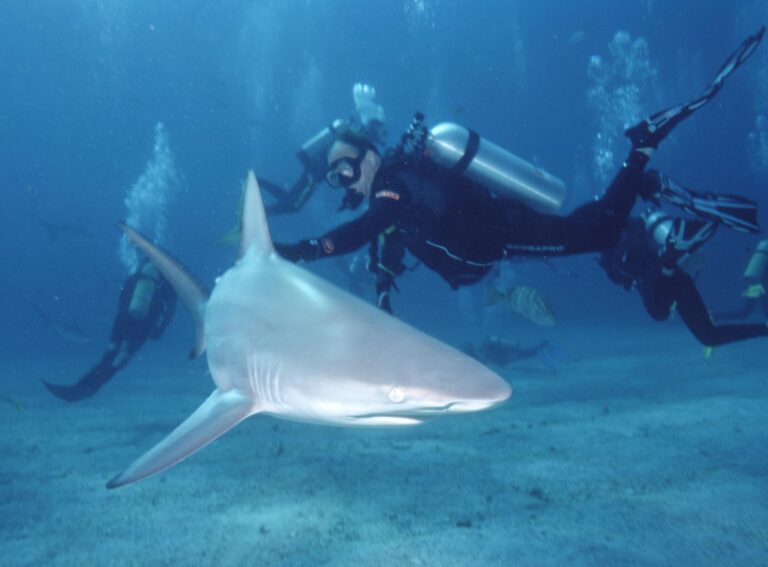
- Great white shark. The species most associated with the south coast, drawn by the seal colonies. The 10.8-foot animal seen nearby that day makes a white shark a strong candidate.
- Tiger shark. A large, broad-ranging predator more common in warmer water but present along much of the Australian coast. Tiger sharks are known for an extremely varied diet.
- Bull shark. Powerful and tolerant of shallow, murky, and even brackish water, which can bring them close to shore and into estuaries.
Without a clear sighting or a wound analysis, identification stays uncertain, which is common in survived encounters where the animal leaves quickly.
Why drifting offshore is the real danger
The single most important detail in this story is the distance. A swimmer 200 metres out, alone on an inflatable, is in a far riskier position than someone in the surf zone. There are three reasons. First, deeper water is where larger sharks naturally hunt. Second, a person that far out is beyond the quick reach of lifeguards and bystanders, so any injury becomes much harder to treat in time. Third, an inflatable ring offers no control: wind and current move it, not the person on it, and many people do not notice how far they have travelled until it is too late.
Inflatable toys are a recurring factor in offshore rescues worldwide, usually involving currents rather than sharks, but the underlying mistake is the same. The toy that feels safe is exactly what removes your ability to stay close to shore.
Staying safe in shark waters
Shark attacks remain rare. Australia recorded around 12 unprovoked bites in 2021, of which three were fatal, against millions of ocean visits. Still, a few habits genuinely lower the odds, especially in a place like Esperance:
- Stay close to shore and within the patrolled, flagged area of the beach.
- Do not use inflatables in open water where wind or current can carry you out.
- Swim with other people and stay in sight of lifeguards.
- Avoid dawn, dusk, and murky water, when sharks are harder to see and more active.
- Check local apps and signage. Western Australia’s SharkSmart system exists precisely so beachgoers can make informed choices.
Even a strong swimmer is slower and weaker than a shark, and a single bite can be serious. The Esperance woman was fortunate. For more detail on lowering your risk, read our guide on how to avoid a shark attack.
Part of our guide: Shark Attacks Guide.
Got a shark photo of your own? Send it to us and we may post it here and on our Facebook page, with your name on it. Share your shark photo