
Rare Smalltooth Sand Tiger Shark Beheaded in Hampshire UK
4 min read
Last Updated on November 24, 2026 by Otis Mako

A rare smalltooth sand tiger shark washed up on a Hampshire beach in March 2023, and what should have been a scientific gift turned into a frustrating loss when locals beheaded the carcass for a trophy. A stranded animal like this can teach researchers a great deal, but only if it is left intact.
What happened at Lepe Beach
The shark came ashore at Lepe Beach in Hampshire, on the south coast of England, looking out across the Solent toward the Isle of Wight. Alisha Openshaw, a 38-year-old hairdresser, found it stranded and struggling while at the beach with her children. She waited for help to arrive, and when none came she pushed the animal back into deeper water herself. She said the shark swam away.
It did not survive. The shark, a sand tiger shark of the smalltooth variety, washed back ashore dead. The historian and broadcaster Dan Snow, who was in Hampshire for Mother’s Day, spotted it and posted a photo online, asking what on earth had appeared on the beach where he regularly swims. His post drew a wave of responses urging him to secure the carcass for scientists. By the time the right team was assembled, it was too late: the shark had been beheaded, with its tail and a fin also removed. What remained was collected by about 9 pm so researchers could still examine it.
The hunt for the missing head
Dan Snow, who has previously hunted for Egyptian artefacts and stories of Nazi gold, turned his attention to finding the decapitated shark parts. He released a video appealing for their return, making a point worth quoting: “It is not illegal to take parts from dead fish washed ashore so there’s no judging, but if you took the head please get in touch, let the scientists have a look and then it’s yours to keep.” The plea was practical rather than accusatory. Scientists simply wanted the chance to study an exceptionally rare specimen before the finder kept their souvenir.
What a smalltooth sand tiger shark is
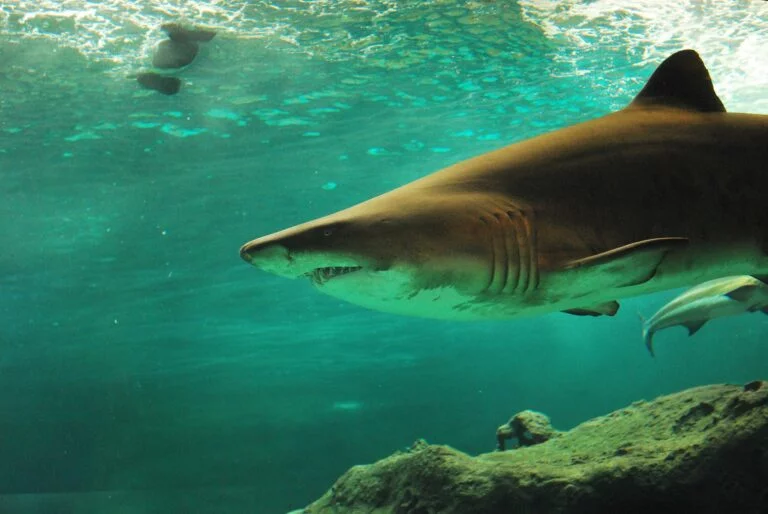
The smalltooth sand tiger (Odontaspis ferox), sometimes called the bumpytail ragged-tooth shark, is a large, deep-water shark that is genuinely seldom seen. It is not the same as the more familiar sand tiger shark, the species often kept in public aquariums; the two are related but distinct. The smalltooth sand tiger usually lives in deep waters along continental slopes, can reach over 4 metres long, and despite a mouthful of fearsome-looking ragged teeth, it feeds on fish and small bottom-dwelling creatures and is considered harmless to people. It is listed as Endangered on the IUCN Red List (2023 assessment). For one to appear in the cool shallow water off Hampshire is extraordinary.
Why a stranded shark is so valuable
A shark this rare almost never comes into the hands of scientists. A fresh, intact carcass lets researchers measure the animal precisely, examine its stomach contents, check its reproductive state, take tissue samples, and confirm the species with certainty. The head in particular holds the jaw, teeth and sensory structures, all of which carry information. A decapitated specimen still has value, but a large part of the scientific record was simply carried off the beach. It is a reminder of why volunteer stranding networks and quick reporting exist: the window to study a rare animal is short.
The climate question
Scientists were keen to study the shark partly to understand how a deep-water, generally warmer-water species ended up in the cool waters off the UK. Strandings of unexpected species are watched closely because they can hint at shifting ranges. As sea temperatures change, marine animals can turn up in places they were not historically recorded. One stranded shark proves nothing on its own, but each well-documented case is a data point, and that is why losing part of this one was a genuine setback.
Sharks in British waters
Many people are surprised that the UK has sharks at all, but it does, and plenty of them. British and Irish waters are home to more than 40 shark species, ranging from the small spurdog and catsharks to the basking shark, the second-largest fish in the world, which gathers off the southwest coast to feed on plankton each summer. Fast-moving species such as the blue shark and the porbeagle range through these seas too. What makes the Hampshire stranding remarkable is not that a shark appeared in UK waters, but that this particular deep-water species did. The seas around Britain are far more shark-rich than most people imagine.
What to do if you find a stranded animal
If you find a stranded or washed-up marine animal, do not take parts of it, and do not assume someone else will handle it. Report it. In the UK, marine strandings can be reported to recognised stranding schemes and the coastguard, and similar networks exist around the world. Note the location, take photographs, and keep the animal as undisturbed as possible until experts arrive. To learn more about the wider family this rare visitor belongs to, read our sand tiger shark species profile.
Updated 18 November 2026: updated the IUCN Red List status from Vulnerable to Endangered (assessed 2023). Source: IUCN Red List version 2025-2, as quoted by FishBase.
Got a shark photo of your own? Send it to us and we may post it here and on our Facebook page, with your name on it. Share your shark photo



Walked that bit of the Solent coast plenty of times and only ever found dogfish washed up. Can’t understand wanting a rotting shark head as a souvenir.