
Another Fatal Shark Attack in Australia
4 min read
Last Updated on May 18, 2026 by Otis Mako

A 59-year-old swimmer was killed by a shark at Chateau-Royal Beach in Noumea, New Caledonia, in February 2023, the third fatal shark bite recorded worldwide that year. This page keeps the event on record and sets it in context: where it happened, which shark was likely involved, and why fatal attacks, though devastating, remain extremely rare.
What happened at Chateau-Royal Beach
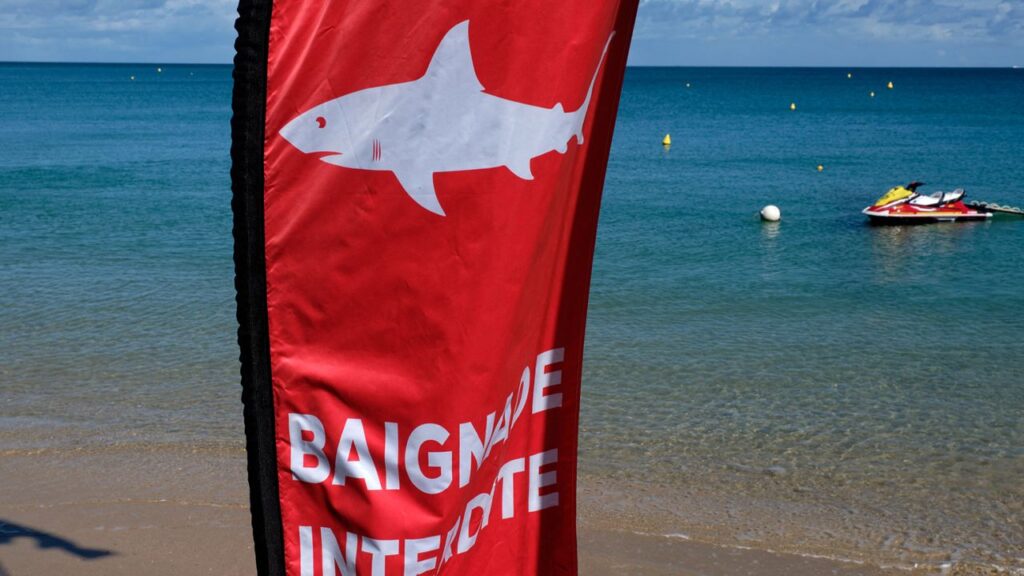
The attack happened on a Sunday. According to witnesses, the man was swimming about 150 metres from shore, near the pontoon, when the shark bit him on the leg and arms. Swimmers panicked and left the water. Two people on jet skis brought the man back to the beach, where CPR was performed, but he died at the scene from multiple bites and severe blood loss. The local paramedic, Dr Vincent Ouradou, reported three separate bites across his arms and leg. The Noumea City Council ordered all swimming and nautical activities closed within a 300-metre coastal band until further notice.
Where this happened
New Caledonia is a French overseas territory in the South Pacific, lying east of Australia. Noumea is its capital, a coastal city on the main island of Grande Terre. The territory is ringed by one of the largest coral reef systems in the world, the New Caledonia Barrier Reef, which supports rich marine life and, with it, sharks. Although the headline framed this as another Australian incident, New Caledonia is its own territory; what it shares with nearby Australian waters is a warm, reef-rich Pacific environment where large sharks are a natural part of the ecosystem.
Which shark was involved
The shark was not formally identified, but many suspected a tiger shark. That is a reasonable guess for the location. Australian and South Pacific waters host well over 100 shark species, and of these the bull shark (Carcharhinus leucas) and the tiger shark (Galeocerdo cuvier) are the two most often found close to swimming beaches. Both are large, powerful and capable of serious injury. The tiger shark in particular is an opportunistic feeder, known for eating an extraordinary range of things, which is part of why it features in so many serious bite cases. Notably, this was the second attack at Chateau-Royal Beach: in January a 49-year-old woman had been bitten by a bull shark there and survived.
A grim run of incidents
This was the third fatal shark bite recorded that year. The one before it was the death of 16-year-old Stella Berry, who entered the water to swim with dolphins and was bitten in the Swan River in Western Australia, unaware a shark was present. The first that year had been in Mexico, where a diver was killed. For context, before this New Caledonia attack the previous fatal shark bite in nearby Australian waters had been in November 2021. Several deaths in a short window naturally feels alarming, but it is the clustering, not the overall rate, that is unusual.
How rare fatal attacks really are
It is important to hold on to the wider numbers, not to diminish a tragedy but to keep it in proportion. The International Shark Attack File, run by the Florida Museum of Natural History, typically records fewer than 70 unprovoked shark bites worldwide in a year, and of those only a small handful, often around five to ten, are fatal. Set against the hundreds of millions of people who swim, surf and dive every year, the risk to any individual is extraordinarily low. By contrast, humans kill sharks in their tens of millions annually, and a large share of shark species are now threatened. The danger runs overwhelmingly in one direction.
Why a shark might bite a swimmer
Understanding why these rare attacks happen helps put them in context. Sharks do not regard humans as natural prey; we are not part of any shark’s normal diet. Most serious bites are thought to fall into a few patterns. The most common is mistaken identity, where a shark in murky water misreads a swimmer or surfer for a fish or seal and delivers an exploratory bite. There is also investigation, since a shark has no hands and uses its mouth to test an unfamiliar object. Occasionally a large, food-motivated shark in an area rich with prey may simply be primed to bite anything moving. The case at Chateau-Royal Beach, a swimmer far from shore near a pontoon, in warm reef water that big sharks patrol, fits the kind of overlap where a serious encounter becomes possible. None of this implies the animal was hunting a person; it implies a tragic intersection of circumstances.
How beaches respond and how to stay safer
The Noumea Council’s immediate closure of the coastal zone is the standard, sensible response: clear the water, give the area time, and watch for the animal. Across the South Pacific and Australia, beach safety increasingly relies on drone patrols, tagged-shark alert systems and lifeguard warnings rather than culls. As a swimmer, the practical steps are simple. Swim at patrolled beaches and obey closures and signage. Avoid the water at dawn and dusk, when many sharks feed. Stay out of murky water and away from river mouths, baitfish and fishing activity. Do not swim far from shore alone, as this victim was near a distant pontoon. And avoid excessive splashing, which mimics struggling prey.
For the wider picture on how shark bites are recorded, why they happen and how to read the statistics sensibly, see our full Shark Attacks Guide.
Part of our guide: Shark Attacks Guide.
Got a shark photo of your own? Send it to us and we may post it here and on our Facebook page, with your name on it. Share your shark photo


A bull shark in January and maybe a tiger a few weeks later, at the same beach. Is something drawing them in there, like fish waste or a river mouth nearby?