Shark Diving Liveaboards: Five Regions, When To Go And What You Will See
7 min read
Last Updated on July 27, 2026 by Otis Mako
A liveaboard is a dive boat you sleep on, and for most of the places where sharks gather in numbers it is the only way to get there. Seven nights with three or four dives a day is the standard unit. The destination matters less than the month: the same offshore reef can be quiet in March and thick with sharks in October. Here are five regions, what the diving is actually like in each, when the sharks turn up, and what the trips involve.
What a liveaboard trip actually involves
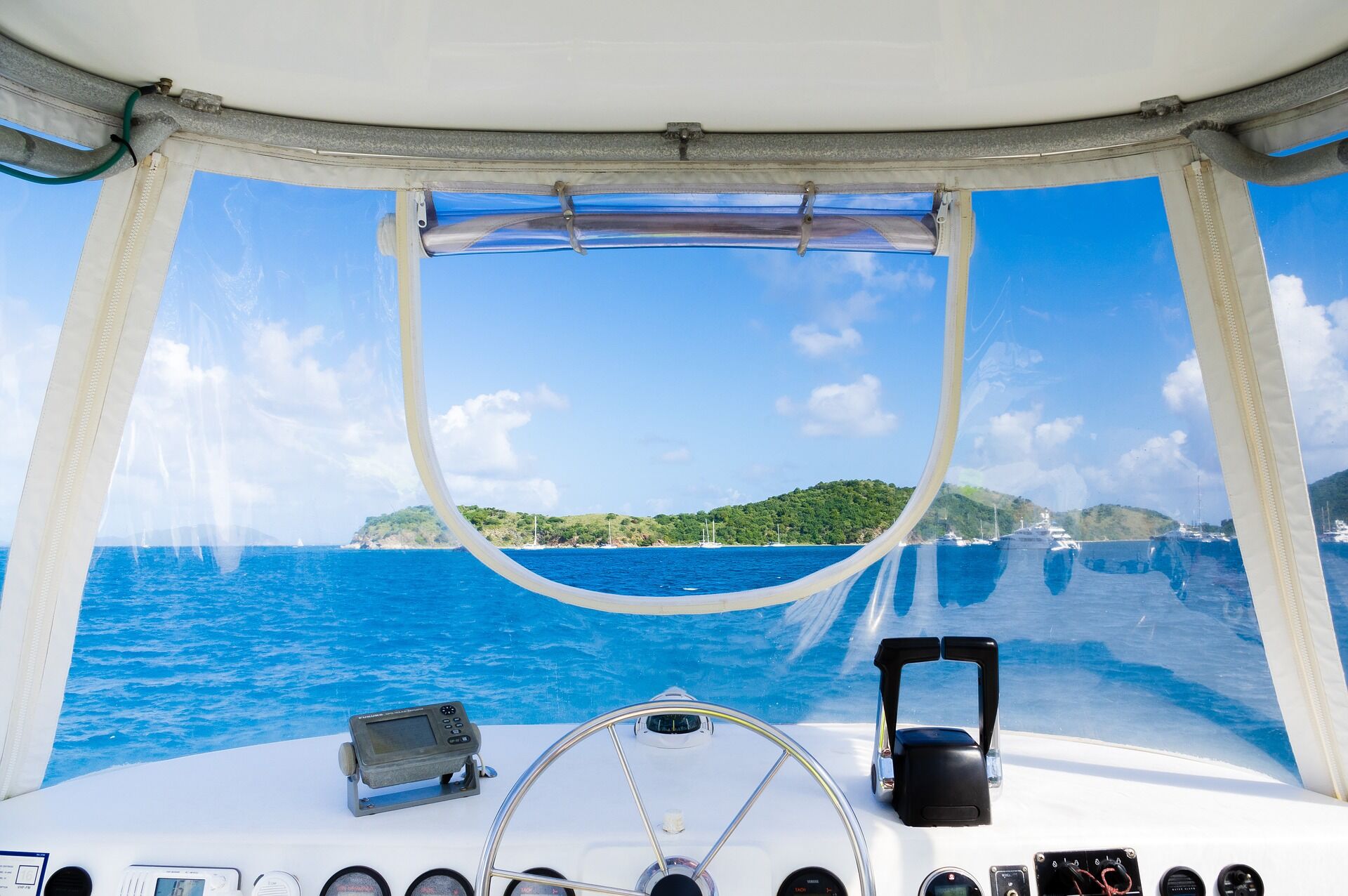
You eat, sleep and dive from the same boat, usually a motor yacht carrying fewer than 30 guests. Cabins are small, the dive deck is where you spend your day, and tanks are filled in your kit between dives so you barely handle them. The rhythm is three or four dives daily, often with a night dive, and long surface intervals spent eating.
Seven nights is the usual trip length. Thailand runs shorter, around four days, because the sites are close to shore. Cocos Island runs eight to ten nights because a day and a half of the trip is spent crossing open ocean each way.
Costs swing enormously by boat, region and season, and the headline fare usually excludes flights, marine park fees, nitrox, gear hire and crew tips. Ask an operator for a current all-in figure rather than trusting any published number, including any you read on a blog.
The obvious drawback is that you cannot leave. If you get seasick, or the group is not your kind of group, you are still on that boat on day five.
1. The Red Sea
Short flights from Europe, warm water all year, and the highest concentration of liveaboards anywhere. What you see depends almost entirely on which itinerary you book, because the shark itineraries and the wreck itineraries go in opposite directions.
Brothers, Daedalus and Elphinstone
These three offshore Egyptian reefs are the shark trip, sold as “BDE” and running from Hurghada or Port Ghalib over about a week. Oceanic whitetips are the draw, peaking from October to December around Elphinstone and the Brothers. They are slow, curious and inclined to come and look at you on the safety stop, which is unnerving the first time and the reason people go back.
The Brothers also produce thresher sharks, usually on the first dive of the day, and scalloped hammerheads show up at Daedalus in the summer months, generally deep and generally not interested in you. All three are exposed pinnacles in open water with real current and nowhere to hide from weather, so trips get rerouted when the wind gets up and operators normally set an experience minimum before they will take you.
Northern Egypt and the wrecks
Northern itineraries trade sharks for steel. The SS Thistlegorm, a British merchant ship, was bombed by two Heinkel He 111s at half past one in the morning on 6 October 1941 near Ras Muhammad, and nine men died. Her cargo of motorcycles, trucks and rifles is still in the holds, with the deepest part of the wreck at around 30 metres. Jacques Cousteau found and dived her in the 1950s on directions from local fishermen and wrote about it in The Living Sea, after which the site was largely forgotten until divers returned to it in the early 1990s.
Sudan
Far fewer boats, and the same reef system without the traffic. Sha’ab Rumi sits about 50 km northeast of Port Sudan and still holds the remains of Conshelf II, Cousteau’s 1963 underwater living experiment, which you can dive. Its south plateau is the scalloped hammerhead site, and nearby Sanganeb rises from deep water with the upwellings that bring sharks in. Operators point at the cooler months, roughly February to June, for hammerheads.
Be realistic about access. Sudan has been at war since 2023 and liveaboard operations there have been heavily disrupted, so check whether trips are genuinely running and what your government’s travel advice says before you put money down.
2. The eastern Pacific
Cooler, greener water, longer crossings, stronger current, and the shark encounters people talk about for years afterwards. None of it is beginner diving.
Galapagos
Darwin and Wolf lie well north of the main archipelago and cannot be reached on a day boat. Only a limited number of permitted liveaboards run there, and no itinerary is shorter than seven nights.
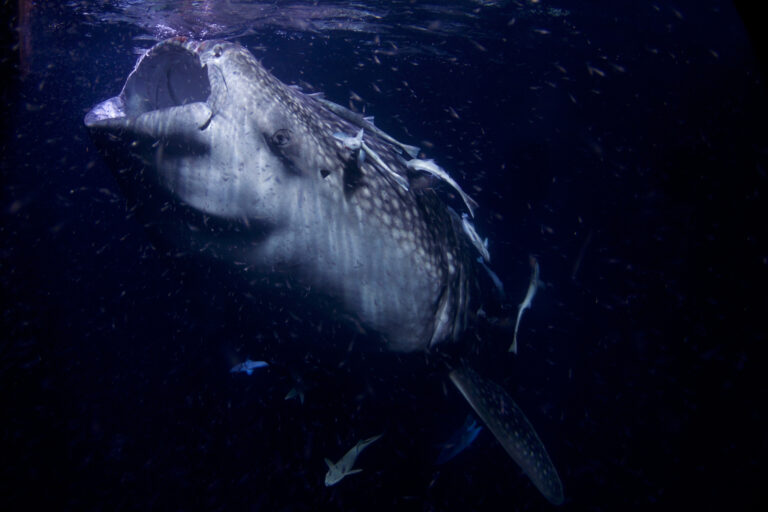
Whale sharks appear from roughly June to November, mostly very large adult females passing the Darwin plateau. Scalloped hammerheads are present all year, and operators genuinely disagree about which months produce the biggest schools, so treat any promise of a specific peak month with suspicion. Roughly June to December brings water of 18 to 24C, stronger current and visibility often in the 15 to 30 metre range. January to May is warmer at 24 to 28C, calmer, and usually murkier.
Darwin’s Arch collapsed on 17 May 2021, leaving two pillars now known as the Pillars of Evolution. The dive site itself is unchanged. Only the photograph is.
Cocos Island, Costa Rica
The crossing from the Costa Rican mainland takes 30 to 36 hours each way, which is why trips run eight to ten nights rather than a week. The reward is scalloped hammerhead schools at seamount cleaning stations, and whitetip reef sharks hunting in packs on night dives. Whale sharks and mantas turn up without being scheduled.
There is no accommodation on the island, which is a national park and a UNESCO World Heritage site. Topside amounts to a ranger station visit and rain, of which the island gets a lot.
Socorro and the Revillagigedo Islands, Mexico
About 400 km from Cabo San Lucas, roughly a day at sea in each direction. The season runs November to May and that is set by the weather window for the crossing, not by the animals.
Giant oceanic mantas are the signature here, and they approach divers rather than the other way round. Sharks include silvertip, Galapagos, silky and whitetip reef, with schooling hammerheads at some sites. Humpback whales pass through from January to March and you often hear them on every dive of the day. Whale shark chances are best early in the season, around November and December.
3. Southeast Asia
The most biodiverse water on the planet, and the weakest of these regions for big shark encounters. Go for reefs, macro life and coral, not for pelagics.
Thailand
The Similan and Surin marine national parks close every year from 16 May to 14 October, so the season is mid October to mid May and everything else is shut. Trips are short, commonly four days, taking in the Similans plus Koh Bon, Koh Tachai and Richelieu Rock. Sharks mean reef species, with whale sharks an occasional bonus that no honest operator will promise you.
Indonesia
Most of the Indonesian fleet works a seasonal loop: Raja Ampat from around October to April, then south to Komodo from May to October. Raja Ampat is drift diving over soft coral, with manta cleaning stations most reliable from December to April, tasselled wobbegongs parked under table corals, and epaulette sharks walking across the shallows on their fins at night. Komodo means colder water in the south and serious tidal current between the islands.
Both sit inside the Coral Triangle, which WWF credits with nearly 600 species of reef-building coral, more than 2,000 reef fish species, and six of the world’s seven marine turtle species.
4. The Maldives
Week-long atoll hopping, and the diving is mostly channel diving: drop at the mouth of a channel on the incoming current, hook in, and watch grey reef sharks hold in the flow while everything else streams past.
Two monsoons decide what you get. The northeast monsoon, roughly November to April, brings calmer seas and clearer water. The southwest monsoon, roughly May to October, brings plankton, which means more mantas and whale sharks in rougher, murkier conditions.
Whale sharks are in South Ari Atoll year round, though they shift from one side of the atoll to the other with the monsoon. Hanifaru Bay in Baa Atoll can hold more than a hundred feeding mantas at once in the southwest monsoon, but scuba is banned there: it is snorkelling only, on a timed permit, with rangers enforcing caps on boat and swimmer numbers. For hammerheads, Rasdhoo means a pre-dawn descent into open blue with no reef under you and no guarantees.
5. Palau and the western Pacific
Palau declared its entire exclusive economic zone a shark sanctuary on 25 September 2009, the first country to do so, covering roughly 600,000 square kilometres. That matters given that fishing kills 80 to 100 million sharks a year, about 25 million of them threatened species.
The diving is current diving. At Blue Corner you hook into the reef edge and hang in the flow while grey reef sharks patrol the drop-off, and Ulong Channel works the same way. A reef hook is standard kit rather than an optional extra.
Two nearby destinations get confused with this one. Chuuk Lagoon, the wreck site where a Japanese fleet was sunk in February 1944, is in the Federated States of Micronesia and is a deep technical wreck destination, not a shark trip. Fakarava in French Polynesia holds hundreds of grey reef sharks in its southern pass, with the biggest gathering around the grouper spawning in June and July, but the diving there is mostly run from land or small charters rather than large liveaboards.
What decides whether the trip works
Timing beats destination. Every region here has months when the animals are present and months when they are not, and no amount spent on the boat changes that.
Experience matters more than certification level. Offshore pinnacles, blue-water descents and hooked-in current dives are not the place to be logging your twenty-fifth dive, and operators on the Red Sea offshore reefs, Galapagos, Cocos and Socorro will ask about your logbook.
Plan for the crossing. Cocos and Socorro both put you at sea for the best part of a day each way, and seasickness medication works before you leave port, not after.
Weather cancels sites, not trips. When the wind gets up, the exposed offshore reefs are the first thing dropped from the itinerary and you dive somewhere sheltered instead. That is the cost of booking the sites where the sharks are.
Bring sharks home
If you want to read up before you book, our store stocks non-fiction shark books and shark accessories. Every purchase supports more shark content on this site.
Pick the month first, then pick the boat.
Got a shark photo of your own? Send it to us and we may post it here and on our Facebook page, with your name on it. Share your shark photo