Why Are We Killing Sharks? The Facts
6 min read
Last Updated on July 27, 2026 by Otis Mako
Humans are killing sharks far faster, and in far greater numbers, than sharks are killing humans. Man has replaced the shark as the apex predator of the seas.
A widely quoted 2013 study led by Boris Worm at Dalhousie University, published by his Wormlab group, put the toll at about 100 million sharks a year, with a possible range running as high as 273 million. Those figures are still argued over, but nobody in the argument thinks the number is small.
So why are we killing them in the first place? Here are the reasons, one by one.
Shark Finning
In this most barbaric of practices, people kill sharks for their fins, only their fins, usually tossing the mutilated animal back to the water to die a slow death. The death is more agonizing when you consider the fact that the shark becomes immobilized and most times will sink to the sea floor to suffocate and drown. This is because some species of sharks have to keep moving constantly to force water through their gills for oxygen. The few sharks that still struggle to live on will starve to death while being slowly eaten by other fish and predators, and may even take a few days before they finally die.
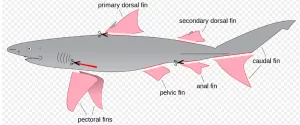
The fishermen involved slice off the shark’s fins and throw the fish back to the ocean while it is still alive and bleeding profusely. They do this to avoid declaring the entire animal at ports and exceeding their fishing quotas. They are only interested in the fins since shark meat will not make them a lot of money and it contains urea. Urea turns to ammonia when the shark dies and contaminates other fish with its strong smell and taste. Some also claim “there isn’t enough space on our fishing boat to carry the whole body back.”
Why Are Shark Fins Such A “Hot” Item?
Sharks fins are among the most valuable seafood products on the market, with large so called ‘trophy’ fins (whale shark pectoral fins) selling for as much as $20,000 each. The fins are harvested mainly for making shark fin soup, a delicacy eaten in Asian countries and in some countries worldwide.
Demand for shark fin soup is still high and has skyrocketed in recent years, mainly because countries that regard shark fins as a delicacy have grown more prosperous. It is not rare in such cultures to attend weddings where guests are served bowls of fin soup that easily cost over $100 per bowl. The aim is mainly to impress invitees with the new couple’s family wealth.
Strangely, shark fin itself is tasteless. The soup has to be flavored with chicken or other stock to be palatable.

Shark populations are being decimated annually. Tens of millions of sharks are killed in the cruelest way imaginable every year to meet demand for shark fin soup. Even the fishermen themselves are expressing concerns, as the sharks they catch are getting smaller and sharks reproduce slowly and take years to reach sexual maturity.
Many consumers have no idea of the suffering one bowl of shark fin soup causes.
Shark Culling
Culling means the selective removal or segregating of animals for a specific reason. In this context it refers to slaughtering sharks to reduce their number in a particular stretch of water. Usually the fish are shot at close range, and the targeted species are great whites, tiger sharks and bull sharks.
Culling happens in several places around the world and there are arguments for and against it. The scale is easy to underestimate, so consider these figures:
- Between 1959 and 1976, Hawaii culled 4,668 sharks. That number includes 554 tiger sharks.
- New South Wales has used shark nets in a Shark Meshing Program along its beaches for over 60 years. Reports for the 2015 to 2016 season show 133 targeted sharks caught and killed, including 90 protected species. In the same period at least 600 other marine animals were caught in the nets, and about 50 percent of them died before they could be released.
- In Queensland, Australia, almost 700 sharks were killed between 2013 and 2014, including endangered great whites and grey nurses. About 100 dolphins, turtles and other sea animals died in the nets alongside them.
- Western Australia culled 68 sharks in a 13 week period in 2014, mostly tiger sharks, though great whites were the main target.
Culling is carried out to “protect” humans, who are the ones entering the sharks’ territory. A shark related fatality is devastating to the family and community of the deceased. But there must be better non-lethal measures authorities can take to reduce shark and human conflict.
Shark Meat
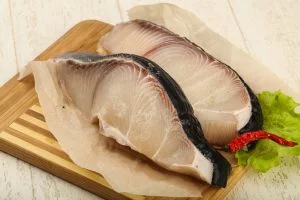
Shark meat is eaten in many cultures and treated as a rare delicacy with medicinal properties. More recently it began to feature on the menu in gourmet restaurants. Type “shark steak” into Google and you will see pages of recipes for it.
- In countries like China and Japan, there is a cultural and medicinal attachment to eating shark meat.
- In Eastern Africa, Iceland and Greenland, shark meat is a staple food.
- In France, Italy and the United States, people eat it as a gourmet dish.
Eating it carries real risks. Sharks are apex predators, so they accumulate large quantities of toxic chemicals and heavy metals from their prey and through skin absorption. Shark meat can contain urea, arsenic, lead and mercury. Eating larger, older sharks increases your chances of lead poisoning.
Iceland has a famous dish called hákarl, meaning rotten or fermented shark. It is made from the flesh of the extremely toxic Greenland shark and has to be cured for months before anyone can eat it.
Shark Bycatch
Fishermen frequently catch sharks unintentionally while fishing for tuna, marlin and other open water fish. Longline fishing, for example, targets tuna, but the lines extend for miles at a time and attract other sea animals to the bait. Bottom trawlers and gillnets add to the problem. Fisheries are advised to return sharks to the water quickly when they are caught this way. Some fishermen are tempted to use the chance to cut off the fins for some quick money instead.
Killing Sharks For Sport
Shark killing tournaments are another contributor to the decline in shark numbers. They offer serious money to people who kill sharks, and the bigger the shark the better.
Professional fishermen compete to catch the biggest shark, or the most sharks, within a set time. The captured sharks are hooked, hung, bled, suffocated and left to die in that position.
These shark fishing or “monster fishing” contests started in the 1970s in Montauk, New York, and winners go away with trophies and thousands of dollars in cash prizes. Winners say the real fun comes from hauling the shark for hours rather than hooking it. They use J-hooks, which can rip the animal’s tail, stomach or throat apart as it struggles to free itself.
Some organizers have introduced measures to release the sharks back to the water after weighing rather than killing them. The chances of survival are still slim, because the sharks struggle vigorously to escape and many are injured in the process. The most commonly caught species are mako, thresher and porbeagle.
Authentic Shark Products
Many of us wrongly assume that because we do not eat shark fin soup we are not contributing to the situation sharks are in. We think it is one particular culture causing the problem. Sharks are killed for these products too:
- Certain energy drinks, pet vitamins and supplements, shark liver oil, shark cartilage powder.
- Real shark teeth, jaws and skin.
- Shark leather (shagreen) for wallets, purses and furniture.
- Cosmetics, lipstick and face cream.
Many manufacturers will not list “shark” among the materials used and may use other names instead, so ask if you have any doubt.
Most countries now regulate shark killing in their own coastal waters. The results would be better if those restrictions extended to international waters and to trade in the most threatened species.
If we carry on killing sharks at the current rate, it is a matter of time before more shark species join the dinosaurs.
What do you think about the practice of killing sharks? And what will happen to the oceans if sharks, the usurped apex predators of the sea, become extinct?
Got a shark photo of your own? Send it to us and we may post it here and on our Facebook page, with your name on it. Share your shark photo