Gallery Of The Ocean’s Most Unusual Fish
4 min read
Last Updated on May 18, 2026 by Otis Mako
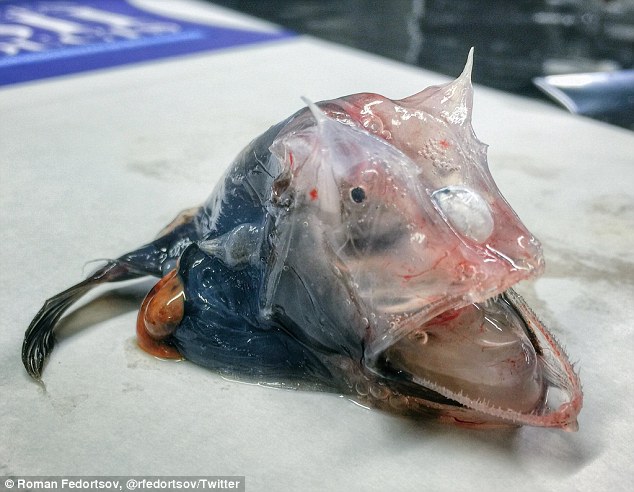
The strangest fish I have ever seen did not come from a documentary or a museum. They came from the Twitter feed of a Russian trawlerman named Roman Fedortsov, who photographs his deep-sea bycatch and posts it for the world to gawp at. This gallery collects some of his best finds, and it is the closest most of us will ever get to the animals living thousands of feet beneath the surface.
Roman Fedortsov works on a commercial fishing trawler operating out of Murmansk, a port city in northwest Russia above the Arctic Circle. His vessels fish the Norwegian and Barents Seas, and their nets sometimes scrape depths where sunlight never reaches. When that happens, the catch includes creatures the crew was never targeting. Most fishermen toss bycatch back without a second look. Roman photographs it first.
The man behind the photos
Roman started sharing his catches around 2016, and his following grew quickly once major outlets picked up the images. He has built an audience of hundreds of thousands across Twitter and Instagram, all of them drawn by the same thing: a steady stream of animals that look invented. He is not a marine biologist, and he often does not know what he has pulled up. He simply documents it. That honesty is part of the appeal, because it shows how much of the deep ocean remains genuinely unidentified.
It is worth being clear about why these animals look the way they do. Many specimens are damaged or distorted by the time they reach the deck. Hauling an animal from high pressure to the surface in minutes is violent. Gas-filled organs expand, eyes can bulge or pop, and bodies swell. Some of the more grotesque features in these pictures are not how the animal looks alive at all. They are the result of decompression.
1) Chimaera (Ghost Shark)

The chimaera, often called a ghost shark or ratfish, belongs to the order Chimaeriformes. These fish are cartilaginous, like sharks and rays, but their lineage split from sharks more than 300 million years ago, which makes them one of the oldest groups of fish still alive. There are roughly 50 recognised species, most living between 200 and 2,000 metres deep.
Chimaeras have a few features sharks lack. Males carry a retractable, club-shaped appendage on the forehead called a tenaculum, used to grip females during mating. Instead of rows of replaceable teeth they have three pairs of permanent grinding tooth plates, ideal for crushing molluscs and crustaceans on the seabed. The green glow in deck photos comes from a reflective layer behind the eye called the tapetum lucidum, the same structure that makes a cat’s eyes shine at night. If you want a closer look at one, our piece on the deep-sea ghost shark filmed for the first time covers a rare living encounter.
2) The Frilled Shark

The frilled shark, Chlamydoselachus anguineus, is the fish most people point to when they call something a living fossil. It has an eel-like body up to about 2 metres long, six pairs of frilly gill slits, and a mouth set at the front of the head rather than underneath. Inside that mouth are around 300 trident-shaped teeth arranged in 25 rows, all of them curved inward so prey that touches them cannot easily escape.
It lives mostly between 500 and 1,500 metres and is rarely seen alive. Researchers believe it strikes like a snake, bending its body and lunging forward to swallow squid and other soft-bodied prey whole. There is even evidence its pregnancies may last up to three and a half years, possibly the longest gestation of any vertebrate. Our full frilled shark species profile goes deeper into how this animal hunts and survives.
The unidentified catches
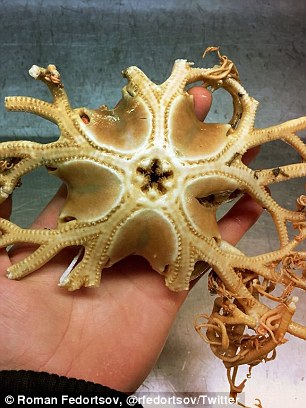
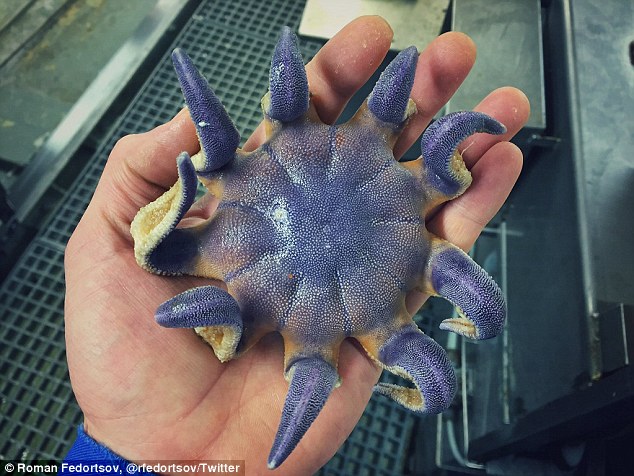
The photographs below are some of Roman’s catches that have no confirmed identification. Looking at them is a useful reminder that the deep sea is not fully catalogued. Scientists estimate that the majority of marine species have still not been formally described, and trawl nets remain one of the few tools that bring deep specimens to the surface at all.


Why deep-sea animals look like this
The deep ocean shapes its residents in predictable ways once you know the pressures involved. Below about 1,000 metres there is no sunlight, the water hovers near 4 degrees Celsius, and food is scarce. Three trends explain most of what looks alien in these photographs.
- Big eyes or no eyes. In the faint twilight zone, oversized eyes gather every available photon. Deeper still, where it is fully dark, many species lose their eyes entirely and rely on touch and chemical cues.
- Loose, watery bodies. Soft, jelly-like flesh and weak skeletons cost less energy to build and maintain. The blobfish became famous for exactly this reason: it looks normal at depth and collapses into a sagging blob on deck.
- Huge mouths and stretchy stomachs. When meals are rare, an animal must swallow whatever it finds. Many deep-sea predators can eat prey larger than themselves.
Bioluminescence is the other defining trait. A large share of deep-sea animals produce their own light using chemical reactions or symbiotic bacteria, using it to lure prey, find mates, or confuse predators.
The catch we never planned to make
Bycatch like this raises a real conservation point. Deep-sea bottom trawling sweeps up animals that grow slowly, breed late, and may live for decades. Many cannot survive the trip to the surface and back. Roman Fedortsov’s photos are fascinating, but they are also a record of fishing gear reaching ecosystems we still barely understand. If these images make you curious about the wider menagerie of strange sharks, our species profiles are a good next stop. The deep ocean is the largest habitat on Earth, and a trawlerman’s Twitter feed is one of the few windows ordinary people get into it.
Got a shark photo of your own? Send it to us and we may post it here and on our Facebook page, with your name on it. Share your shark photo