
Donald Trump and Sharks: Where the Fear Comes From
3 min read
Last Updated on July 27, 2026 by
Donald Trump says he is not a fan of sharks, and by one well-publicised account he could not stop watching them on television. That combination is more common than it sounds, and it says more about how films and television have shaped the public idea of sharks than it does about any one person.
What Trump has said about sharks
Trump has tweeted, “Sorry folks, I’m just not a fan of sharks.” The adult film actress Stormy Daniels later said that during their 2006 encounter she watched him sit glued to the TV during Shark Week, and that he told her he was terrified of the animals. According to Daniels, he went further, saying he would never donate to any charity that helps sharks and that he hoped all the sharks would die.
Someone who says he is not a fan of sharks was, on that account, still watching Shark Week from start to finish.
Fear of sharks has a name
An intense, irrational fear of sharks is common enough to have a clinical label: galeophobia, sometimes also called selachophobia. It belongs to the same family of specific phobias as a fear of spiders or heights. Very few people who fear sharks have ever encountered one. The fear is built almost entirely from films, news coverage, and a deep cultural association of sharks with danger.
That makes the obsessive watching less strange than it sounds. People with a phobia are often drawn to the very thing that frightens them, partly out of a need to feel in control of the threat. Watching sharks from the safety of a sofa is a way of approaching the fear without any actual risk.
Why our idea of sharks is so distorted
Popular culture shaped what most people believe about sharks, and it got most of it wrong. The turning point was the 1975 film Jaws, which cast the great white as a relentless monster and triggered a wave of fear and trophy fishing along the US coast. Steven Spielberg, who directed it, has since said he regrets the film’s effect on shark populations.
Television has cut both ways. Discovery’s Shark Week, running every summer since 1988, is the longest-running cable programming event in history and has introduced millions of viewers to shark biology. It has also leaned on sensational, fear-driven titles that reinforce the myths good science is trying to dismantle. If you want documentary recommendations that lean toward the educational end, our roundup of shark documentaries for Shark Week is a good place to start.
The facts behind the fear
According to the International Shark Attack File, kept by the Florida Museum of Natural History, there are usually fewer than 10 fatal unprovoked shark bites worldwide in a typical year, out of a global total of roughly 60 to 80 bites. You are statistically more likely to be killed by a falling coconut, a lightning strike, or a vending machine.
Meanwhile, the danger runs overwhelmingly the other way. Humans kill an estimated 80 to 100 million sharks every year, about 25 million of them threatened species, mostly through commercial fishing and the fin trade. A 2021 study in the journal Nature found that oceanic shark and ray populations had fallen by about 71 percent since 1970, and the IUCN now lists more than a third of all shark and ray species as threatened with extinction.
Sharks and politics: an awkward history
Trump is not the first public figure to put sharks in the spotlight for the wrong reasons. Sharks have long been used as shorthand for menace in political rhetoric and cartoons, which only deepens the cultural fear. The contrast with conservation policy is sharp. The United States banned the shark fin trade across all states with the Shark Fin Sales Elimination Act, passed at the end of 2022. Public attitudes, shaped by exactly the kind of media a phobic viewer binges, are part of what makes laws like that politically possible.
From fear to fascination
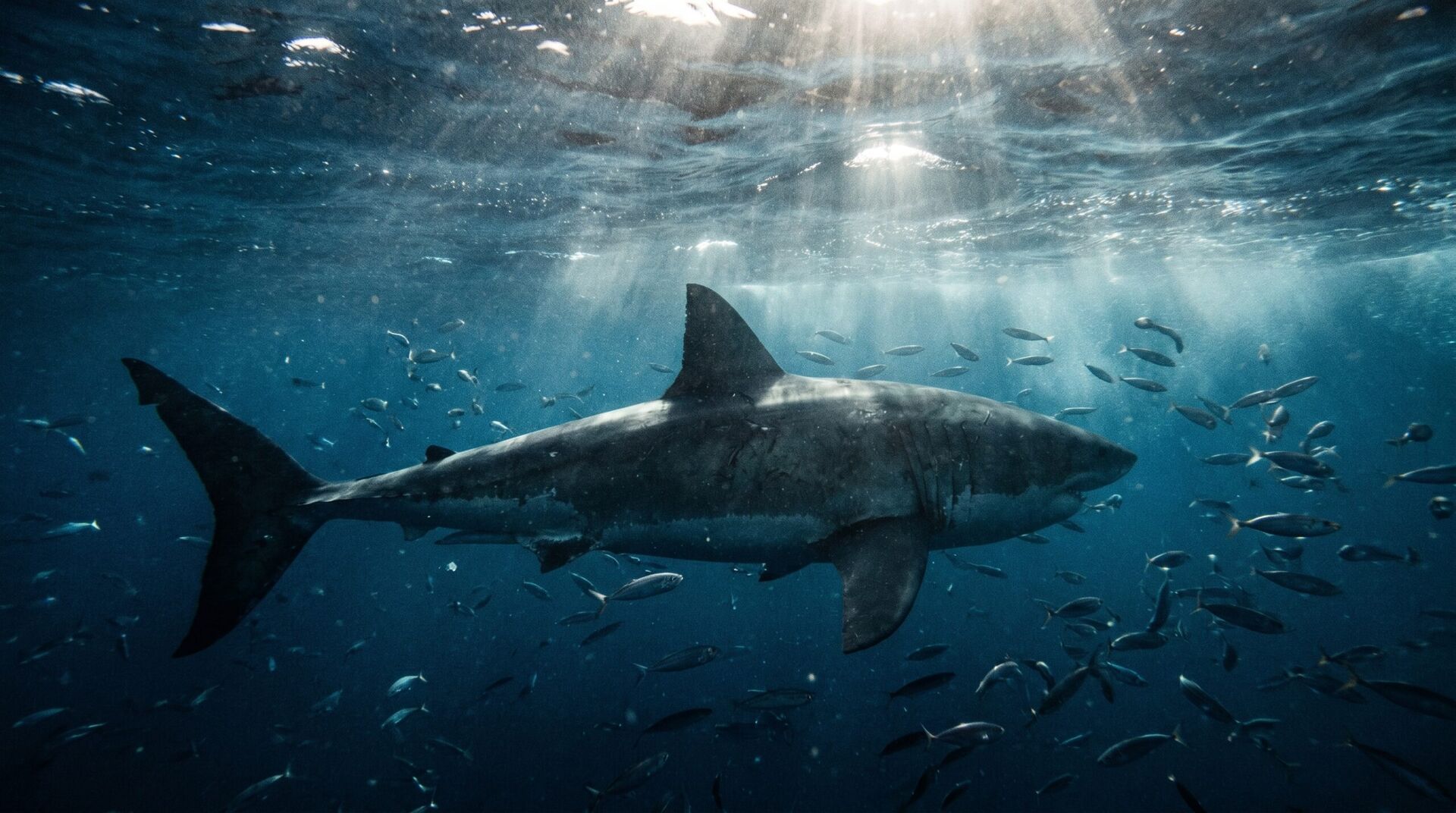
Learning about sharks genuinely helps with the fear. Understanding that a great white hunts seals rather than surfers, that most bites are cases of mistaken identity, and that sharks keep entire marine food webs in balance tends to replace dread with respect. If watching hours of shark documentaries is what it takes to get there, that is no bad thing. To see how rare real danger is, read our guide on how to avoid a shark attack.
Got a shark photo of your own? Send it to us and we may post it here and on our Facebook page, with your name on it. Share your shark photo


Seems A Lover Of Nature if I may state my opinion respect for taking the Time to appreciate Nature !! Respect to He !!
Stupid in all ways, I love watch the Shark Week, to learn, to understand Sharks